 Merken
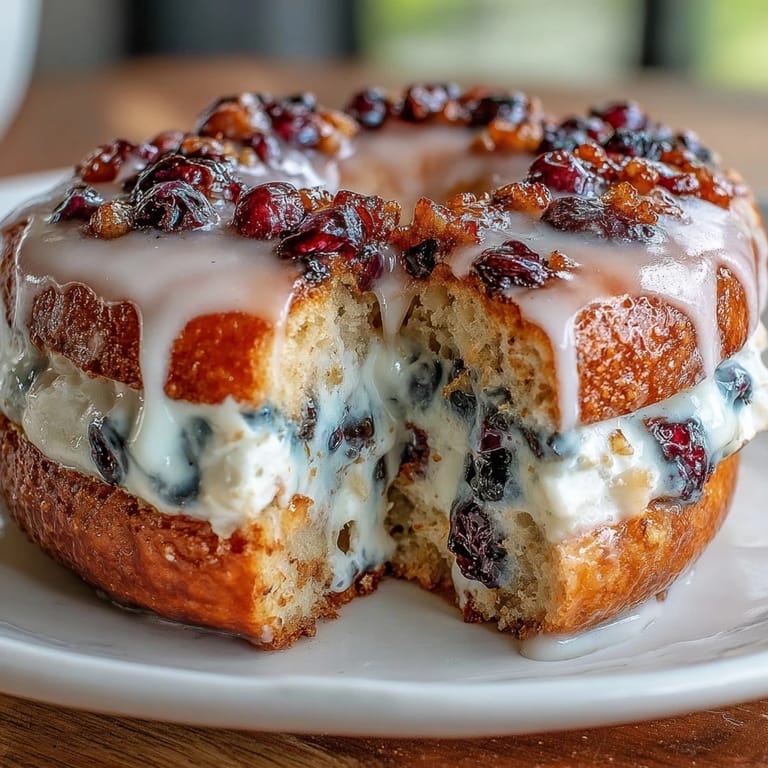
 One Sunday morning, my roommate shuffled into the kitchen while I was experimenting with protein powder in bagel dough, and the smell of blueberries bubbling just beneath the surface made her pause mid-coffee. She watched skeptically as I pulled these pillowy, jewel-studded bagels from the oven, then tasted one with the lemon glaze still warm. The look on her face said everything—she'd never considered breakfast could taste this good and actually fuel her properly. That moment taught me that healthy food doesn't have to feel like a compromise; it just needs the right recipe.
I made these for a work potluck last spring, and watching people come back for seconds while asking, 'Wait, these are homemade?' felt like winning a quiet victory. Someone asked if I used a bakery recipe, and I loved admitting I'd invented it on my kitchen counter. Those bagels sparked conversations about protein baking that lasted weeks, which tells you something about how craveable they really are.
Ingredients
- Bread flour (2½ cups): It has enough gluten to create that characteristic chewy bagel texture that all-purpose flour won't quite deliver.
- Vanilla protein powder (1 cup): Choose one you actually enjoy tasting, since it becomes part of the flavor profile—plant-based works beautifully if dairy isn't your thing.
- Instant dry yeast (2¼ tsp): The water temperature matters more than you'd think; too hot kills it, too cool and your bagels won't rise properly.
- Fresh or frozen blueberries (1 cup): If using frozen, don't thaw them first—this prevents them from bleeding into the dough and keeps them intact through baking.
- Warm water (1 cup): Aim for around 110°F; your wrist should feel the warmth without discomfort.
- Unsalted butter (2 tbsp, melted): Melting it before adding lets it distribute evenly through the dough without leaving greasy pockets.
- Fresh lemon juice (2 tbsp) and zest (1 tsp): Real lemon makes all the difference in the glaze—bottled juice tastes flat by comparison.
Tired of Takeout? 🥡
Get 10 meals you can make faster than delivery arrives. Seriously.
One email. No spam. Unsubscribe anytime.
Instructions
- Mix your dry team:
- Whisk the bread flour, protein powder, sugar, salt, and yeast together in a large bowl until everything is evenly distributed and there are no clumps hiding at the bottom. This step prevents pockets of unmixed yeast later on.
- Bring it together:
- Pour in the warm water and melted butter, then stir until a shaggy, rough dough forms—it should look a bit messy, which is exactly right. Don't worry about smoothness yet; that's what kneading is for.
- Knead until it feels alive:
- Spend 8 to 10 minutes working the dough by hand or with a stand mixer, watching as it transforms from rough to smooth and elastic. You'll feel the difference when you hit the right point—it'll bounce back when you poke it.
- Fold in the blueberries gently:
- Add the frozen or fresh blueberries carefully, using a folding motion rather than aggressive stirring so they stay whole and distributed throughout. A few broken ones won't hurt, but intact berries make prettier bagels.
- Let it rise and swell:
- Shape the dough into a ball, place it in a lightly greased bowl, cover it with a damp cloth, and set it in a warm spot for about 1 hour until it's roughly doubled in size. A warm corner of your kitchen, a turned-off oven with the light on, or even a sunny windowsill all work beautifully.
- Divide and shape with intention:
- Punch down the dough gently, divide it into 8 equal pieces, roll each into a tight ball, then use your thumb to poke a hole through the center and stretch it into a bagel ring. The hole should be about 1½ inches wide; it'll shrink slightly as it bakes.
- Second rise, short and sweet:
- Place your shaped bagels on parchment paper, cover them loosely, and let them rest for 15 minutes while you prepare the boiling pot. This brief rest helps them hold their shape during boiling.
- Get the water ready:
- Bring 8 cups of water to a gentle boil in a large pot; if you want slightly shinier bagels, stir in 2 tablespoons of honey or maple syrup. This step is optional but worth doing.
- Heat the oven:
- While the water reaches a boil, preheat your oven to 400°F so it's ready the moment your bagels come out of the water.
- The boil—the magic step:
- Working in batches of 2 or 3, gently place bagels into the boiling water and boil for exactly 1 minute per side, turning them carefully with a slotted spoon. You'll notice them sinking at first, then floating up—that's how you know they're done on that side.
- Into the oven for the finish:
- Return the boiled bagels to your parchment-lined baking sheet and bake for 20 to 25 minutes until they're golden brown on top and sound hollow when you tap them. The crust should feel firm but not hard.
- Cool before glazing:
- Transfer the bagels to a wire rack and let them cool completely—this prevents the glaze from sliding off a warm bagel.
- Make the lemon glaze:
- Whisk together powdered sugar, fresh lemon juice, and lemon zest in a small bowl, adding just enough milk or water to reach a drizzling consistency. It should be thick enough to coat the bagel but thin enough to flow gently.
- Finish with brightness:
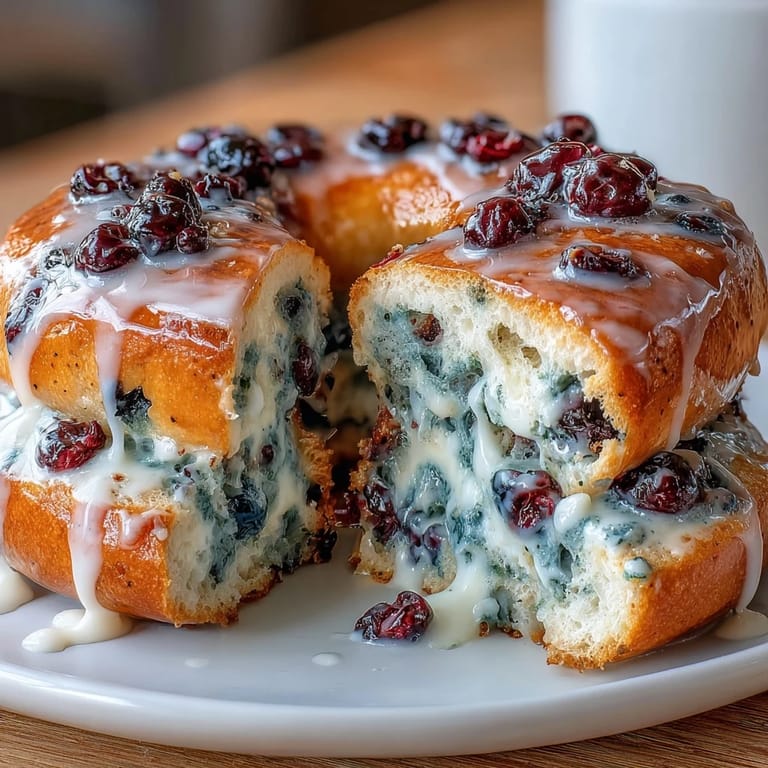
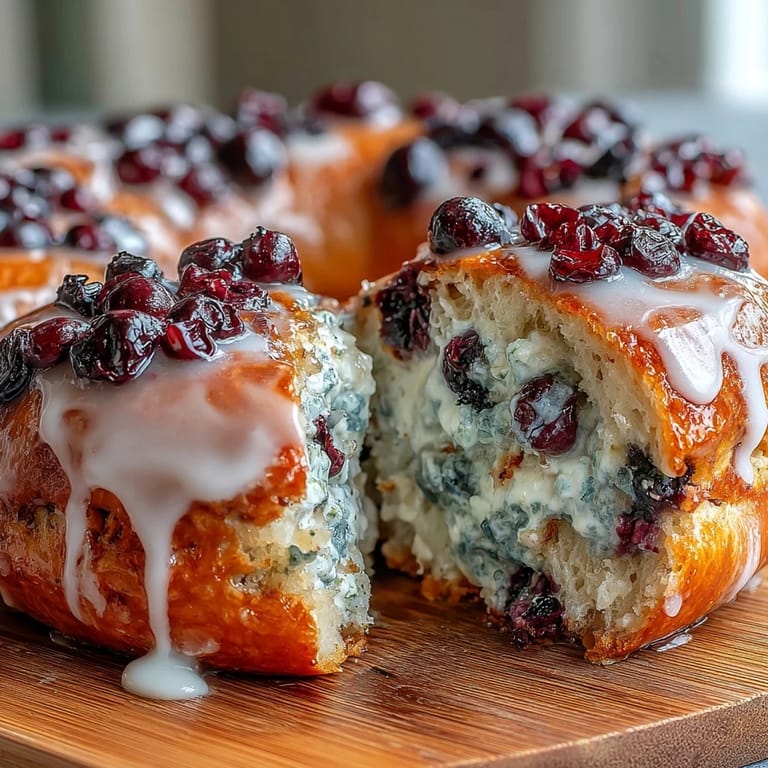
- Once the bagels are completely cool, drizzle the glaze across the top of each one and let it set for a few minutes before serving. The tartness of the lemon cuts through the richness and brings the blueberry flavor forward beautifully.
 Merken
 I've served these at lazy weekend brunches where friends linger over coffee, and there's something about a homemade bagel that makes people slow down. It became our thing—Sunday bagels, always with the lemon glaze, sometimes with an extra cup of tea.
The Secret to Chewy Bagels
The texture comes down to bread flour and patience more than anything else. Don't rush the rise, and don't skip the boiling pot—those two things are where the magic happens. I learned this the hard way by trying to bake bagels straight without boiling, and they turned out dense and bready, missing that signature chew entirely.
Making Them Your Own
Once you nail the basic recipe, you can have fun with it. I've made versions with raspberries instead of blueberries, and the tartness is even more pronounced. My friend swapped in Greek yogurt for half the water for extra protein and a subtle tang, which was brilliant.
Storing and Freezing
These bagels stay fresh in an airtight container for about three days, but they're honestly best on day one when the crust still has a slight snap. The freezer is your friend though; wrap them individually and they keep for up to three months, ready to thaw and briefly toast whenever you need them.
- Cool bagels completely before wrapping to avoid condensation and sogginess.
- Toast from frozen for about 2 minutes on each side to revive them perfectly.
- You can freeze them before or after glazing, but I prefer to glaze them fresh after thawing.
 Merken
 These bagels prove that breakfast doesn't have to be quick to be easy, and that feeding yourself well doesn't mean sacrificing flavor or fun. Make a batch this weekend and taste the difference real ingredients and a little patience can bring.
Häufige Fragen zum Rezept
- → Wie sorgt das Kochen der Bagels für die typische Textur?
Das kurze Kochen in Wasser vor dem Backen verfestigt die Kruste und macht die Bagels besonders zäh und außen knusprig.
- → Kann man gefrorene Blaubeeren verwenden?
Ja, gefrorene Blaubeeren können direkt in den Teig gegeben werden, ohne sie vorher aufzutauen, um zu verhindern, dass der Teig zu feucht wird.
- → Wofür dient das Proteinpulver im Teig?
Proteinpulver erhöht den Nährwert und sorgt für eine saftigere, dichtere Konsistenz, die sättigender wirkt.
- → Wie lässt sich die Zitronenglasur am besten auftragen?
Die Glasur wird nach dem vollständigen Abkühlen der Bagels dünn darüber geträufelt und sollte einige Minuten trocknen, bevor serviert wird.
- → Kann der Honig im Kochwasser weggelassen werden?
Ja, der Honig ist optional, er verleiht nur eine leichte Süße und eine schöne Bräunung der Oberfläche.