 Merken
 The first time I threw together a platter like this, it wasn't planned at all. Friends were coming over unexpectedly, and I had about twenty minutes to create something impressive. I remembered how much they all loved spicy food, so I grabbed everything sharp, colorful, and a little dangerous from my fridge. When they walked in and saw that blazing red center surrounded by all those carefully arranged sections, their faces lit up. That moment taught me something: the best appetizers aren't always about complex cooking—they're about creating an experience that looks as bold as it tastes.
I still laugh thinking about the time my partner challenged himself to grab a whole jalapeño slice and pair it with the sharpest cheddar, no backup. He regretted it immediately, but everyone else at the table couldn't stop laughing—and then they all wanted to try it too. That's when I realized this platter isn't just food; it's permission to be a little reckless together.
Ingredients
- Chili flakes: These are your flavor anchor, so don't buy the sad, dusty jar from the back of the cupboard—get fresh ones with actual color and fragrance.
- Fresh red chili peppers: The seeds carry most of the heat, so leave them in if you want drama or remove them if you're cooking for people who say they like spice but don't actually.
- Fresh jalapeño: More of a visual element than a heat bomb, but it adds that pop of green.
- Sharp cheddar cheese: The tang cuts through richness and plays beautifully against the spice.
- Pepper jack cheese: This one already has its own heat story, so it feels like a natural conversation partner with the chili.
- Feta cheese: The salty, tangy notes balance out the spice and add textural variety.
- Spicy chorizo: If you're including it, slice it thin enough that people can actually taste the heat without it overwhelming everything else.
- Soppressata: Italian, salty, and just spicy enough to make sense on this platter without stealing the show from the peppers.
- Cherry tomatoes: Their sweetness is essential—they're the kindness in an otherwise audacious arrangement.
- Red bell pepper: Mild and sweet, it's the voice of reason on this spicy platter.
- Cucumber: Cool and crisp, a gentle palate cleanser between brave bites.
- Radishes: Peppery and crunchy, they're like the underrated friend who adds just the right amount of personality.
- Spicy hummus: Read the label and make sure it actually tastes spicy, not just promising.
- Roasted red pepper spread: Slightly sweet, slightly smoky—it's your bridge between daring and approachable.
- Pita chips: Sturdy enough to hold toppings without falling apart mid-bite.
- Multigrain crackers: They add texture and feel a bit more intentional than plain saltines.
- Vegetable sticks: Carrots and celery round out the platter with familiar, hydrating crunch.
Tired of Takeout? 🥡
Get 10 meals you can make faster than delivery arrives. Seriously.
One email. No spam. Unsubscribe anytime.
Instructions
- Build your center stage:
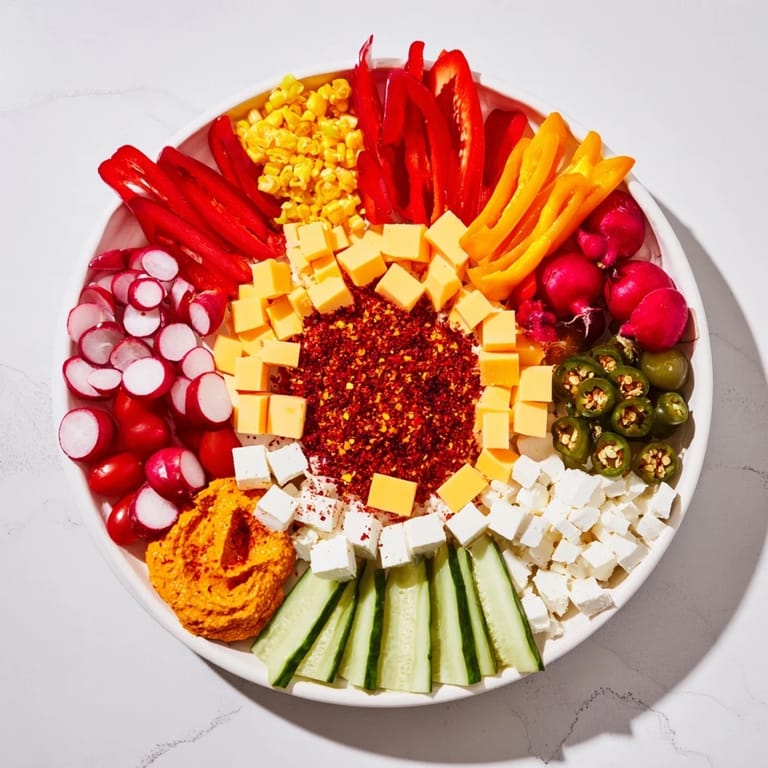
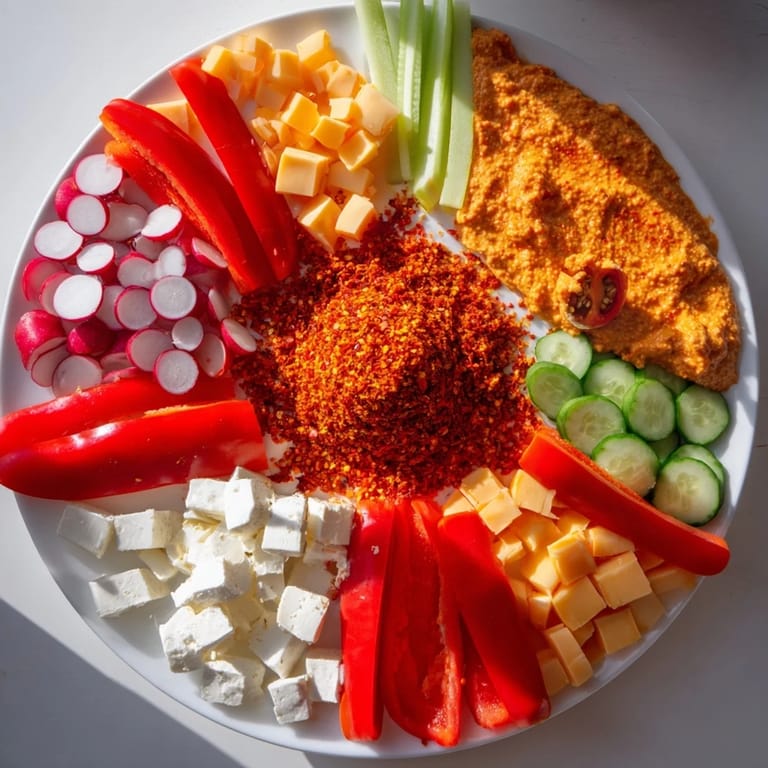
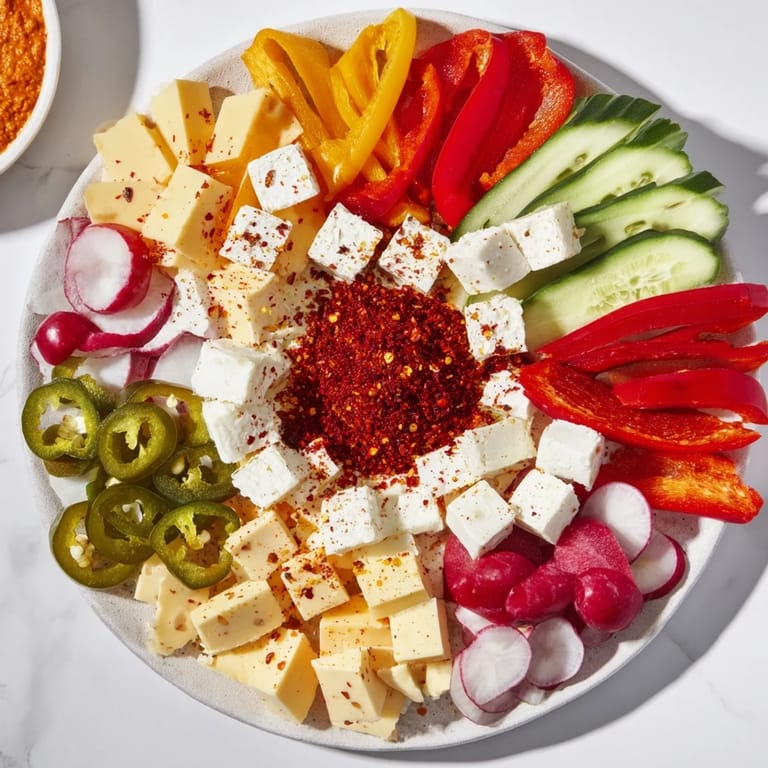
- Pour the chili flakes into a small bowl or create a small mound right in the middle of your largest platter—somewhere it won't get accidentally knocked over but visible enough that it's clearly the main event. Arrange your sliced fresh peppers around it like they're protecting something precious.
- Create your radiating sections:
- Starting from the spicy core and working outward, arrange each element into its own little wedge or cluster. Think of it like you're creating neighborhoods, each with its own vibe. The cheeses go in one direction, the meats in another, vegetables in their own area, dips tucked into small bowls, and crunchy elements scattered like they belong there.
- Make it visually irresistible:
- Step back and look at it. Does the color balance feel good? Are there bright reds next to creamy whites? Is there enough contrast that it actually catches the eye? Adjust until it looks like you meant to do this, even if you threw it together in fifteen minutes.
- Serve with intention:
- Put it on the table and let people loose. Watch them figure out their own combinations—that's the whole point of this platter.
 Merken
 What I love most about this platter is watching someone go from cautious to adventurous as they explore it. They start with a safe pairing—cucumber with hummus—and then they get curious about combining that sharp cheddar with a jalapeño slice. By the end of the night, everyone's developed their own signature combination, and somehow they all work.
The Heat Adjustment Game
Not everyone's spice tolerance is the same, and this platter respects that. The beauty is that people can control their own heat level by deciding how much of that central chili core they actually use. Some people will want to dab just a tiny pinch onto their cheese, while others will treat the peppers like they're seasoning for the entire platter. I've learned to organize it so the milder elements (like the cucumber and radishes) are easily accessible for people who want to cool down, while the spicy spreads and meats are just a few inches away for those who want more burn.
Platter Architecture Matters
I used to just randomly scatter things around, and it looked chaotic instead of intentional. Now I think of it like designing a garden: symmetry isn't required, but there should be a sense of order. Having clear sections makes it easier for people to navigate, and it also makes the platter look more polished. The radial pattern—everything radiating out from that spicy center—creates natural flow and makes guests instinctively understand how to engage with it. Plus, when people rearrange things while eating (and they will), it still looks deliberately styled rather than picked over.
Timing and Temperature
Since nothing here is cooked, timing is purely about freshness. Prep everything as close to serving as possible—peppers start to wilt if they sit too long, and cheese is best when it hasn't been sitting out warming up. If you're preparing for a party, keep the components cool until the last minute, then assemble it right before people arrive. The only things that benefit from sitting out are the dips and spreads, which actually taste better at room temperature.
- Keep everything in the fridge until assembly time, then bring it out no more than fifteen minutes before people arrive.
- If you're worried about items drying out, cover the platter loosely with plastic wrap and remove it just before guests see it.
- The chili flakes can sit out all night without degrading; cheese softens faster, so refresh it if the party goes long.
 Merken
 This platter works because it feels generous without being pretentious, and it promises an experience rather than just filling stomachs. Whether you're hosting a game night or impressing someone new, it says you care about the details—and you didn't stress yourself to pieces making it.
Häufige Fragen zum Rezept
- → Wie kann die Schärfe angepasst werden?
Die Schärfe lässt sich durch die Wahl milderer oder schärferer Chiliflocken und frischer Peperoni steuern. Wer es weniger scharf mag, kann die Samen entfernen oder mildere Sorten verwenden.
- → Gibt es vegane Alternativen für die Käse- und Wurstkomponenten?
Ja, pflanzliche Käse- und Fleischersatzprodukte können problemlos verwendet werden, um eine vegane Variante zu kreieren, ohne das geschmackliche Konzept zu verlieren.
- → Wie wird die Platte am besten serviert?
Die Zutaten werden in strahlenförmigen Abschnitten auf einem großen Teller arrangiert. Die scharfen Zutaten liegen zentral, damit Gäste nach Belieben die Intensität anpassen können.
- → Welche Beilagen passen gut zur würzigen Platte?
Knusprige Pita-Chips, Multikorn-Cracker und frisches Gemüse ergänzen die Aromen und sorgen für unterschiedliche Texturen.
- → Was eignet sich als Getränkebegleitung?
Leichte Weißweine oder erfrischende Biere harmonieren hervorragend mit den würzigen und vielfältigen Geschmacksnoten der Platte.