 Merken
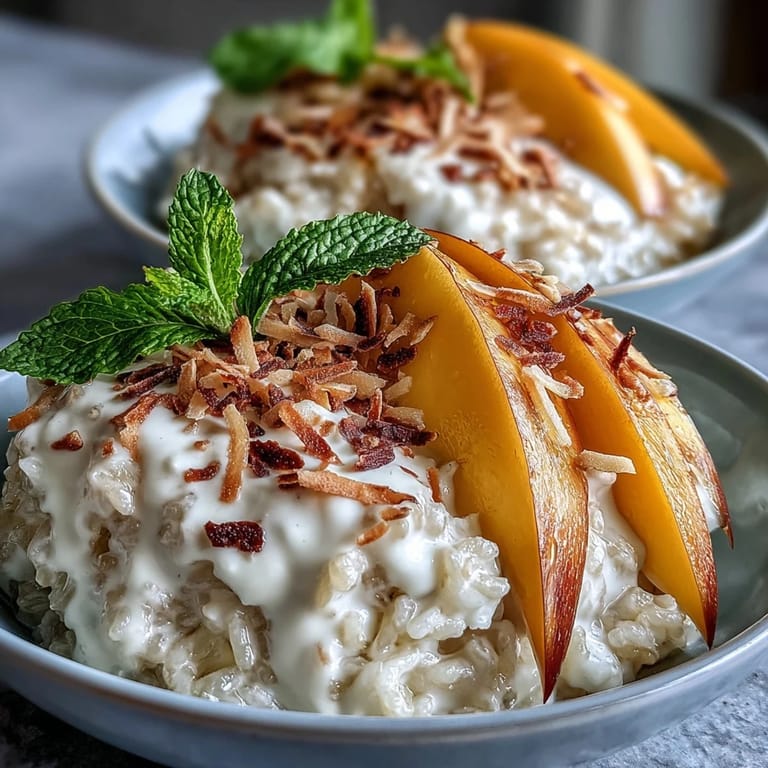
 An unexpected gift from a friend's Bangkok trip—a small bag of glutinous rice and a handwritten note about street vendor breakfast bowls—sat in my pantry for weeks before curiosity finally won. That first morning, the apartment filled with the most comforting steam, and when I drizzled that golden coconut cream over the warm rice, something clicked. It wasn't just breakfast; it was a moment of pure tropical calm before the day demanded anything from me.
I made this for my sister on a Sunday morning when she was going through a rough patch, and watching her face soften after that first bite reminded me why feeding people matters so much. She went back for seconds, then asked for the recipe—not because she needed it written down, but because sharing something that made her feel better felt important to both of us.
Ingredients
- Glutinous (sticky) rice, 1 cup: This isn't regular rice—the starch content is higher, which is why it becomes creamy and clingy rather than fluffy, and honestly, that's the whole charm of this dish.
- Water, 1 1/2 cups: The ratio matters because too much water and you'll have porridge, too little and the rice stays hard; I learned this after one unfortunate morning scramble.
- Full-fat coconut milk, 1 can (13.5 oz / 400 ml): Don't use lite—that defeats the purpose; the fat is what makes this taste like something special rather than diet breakfast.
- Maple syrup or agave nectar, 1/4 cup: Either works, though maple syrup brings a subtle earthiness that somehow complements the tropical vibes better.
- Sea salt, 1/4 teaspoon: A small pinch that makes the sweetness sing instead of feeling one-dimensional.
- Fresh ripe mangoes, 2 large: Pick ones that yield slightly to pressure and smell fruity at the stem; underripe mangoes will disappoint you mid-bite.
- Toasted sesame seeds or coconut flakes (optional): These add a textural surprise and a subtle nutty note that elevates the whole thing.
- Fresh mint leaves (optional): A small handful scattered on top brings brightness and makes it feel intentional rather than just thrown together.
Tired of Takeout? 🥡
Get 10 meals you can make faster than delivery arrives. Seriously.
One email. No spam. Unsubscribe anytime.
Instructions
- Rinse and prep the rice:
- Run your sticky rice under cold water, stirring gently with your fingers until the water stops looking cloudy—this removes excess starch and prevents the rice from becoming gluey in a bad way. It only takes a few minutes but absolutely makes a difference in texture.
- Cook the rice low and slow:
- Combine the rinsed rice with water in a saucepan, bring it to a rolling boil, then drop the heat immediately and cover it tight. Let it sit covered for 10 minutes after the timer goes off—this resting period is when the magic happens and the grains finish absorbing moisture perfectly.
- Warm the coconut mixture:
- While rice cooks, pour your coconut milk, sweetener, and salt into another saucepan and let it steam gently over medium heat. Watch for that first hint of steam rising, then pull it off—boiling coconut milk separates and tastes bitter, which ruins everything you've just accomplished.
- Fold in the coconut flavor:
- Pour most of the warm coconut mixture over your cooked rice and fold it together gently using a rice paddle or spatula, treating the grains like they're delicate. Set it aside covered for 10 minutes so the rice drinks in every drop of that creamy sweetness.
- Build your bowl:
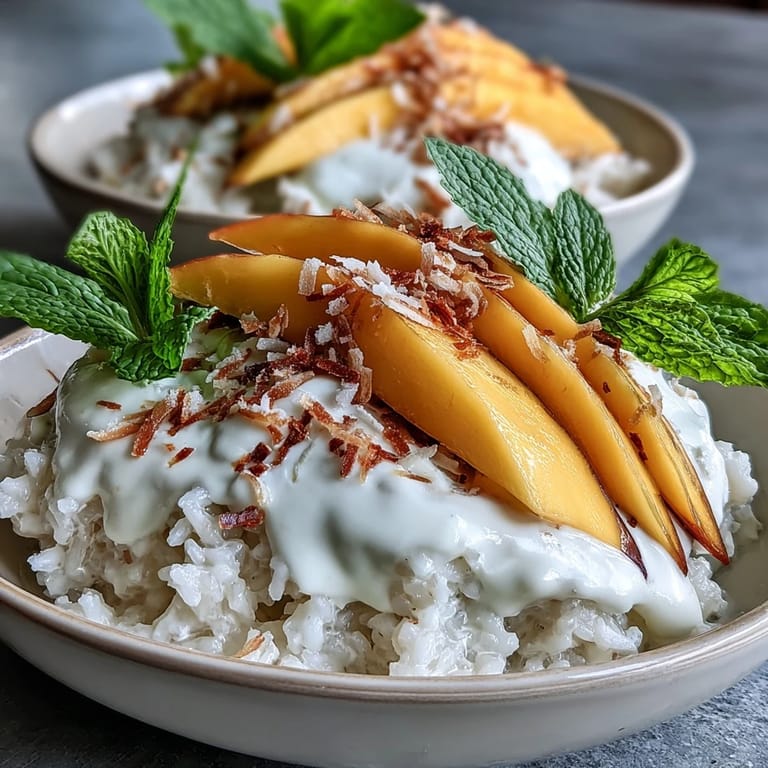
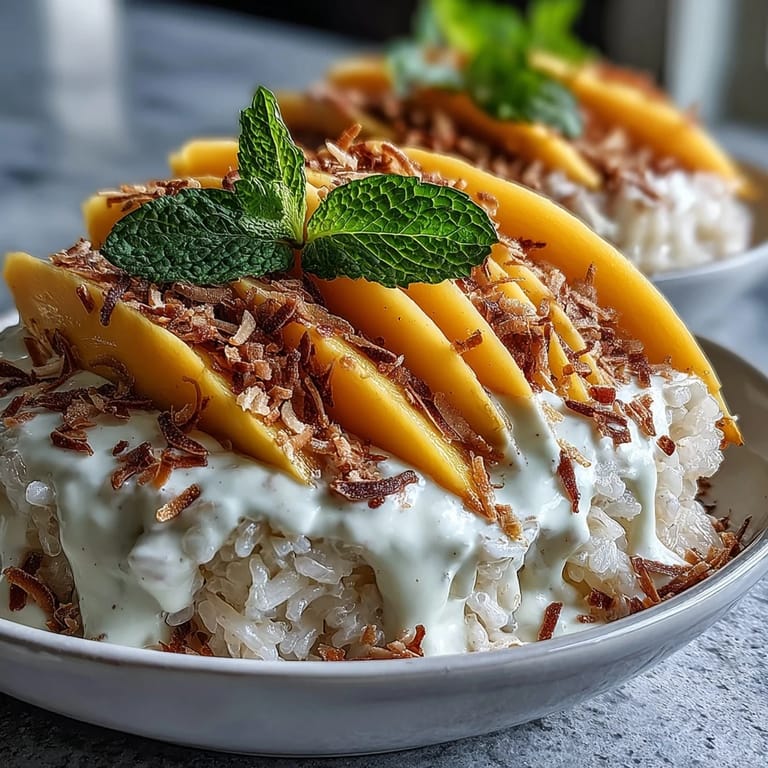
- Divide the coconut rice among bowls, crown each one with sliced mango, drizzle the reserved coconut cream across the top, and finish with sesame seeds and mint if you're feeling fancy. Serve it warm or at room temperature—honestly, both are beautiful.
 Merken
 There's something about eating warm sticky rice with cold, juicy mango that makes your brain go quiet for a moment. That contrast—the temperatures, the textures, the way sweetness builds gradually instead of hitting you all at once—transformed breakfast from a task into an experience I actually looked forward to.
Why This Recipe Works Year-Round
Even when fresh mangoes aren't at their peak, this dish holds its own because the coconut cream and rice are doing most of the heavy lifting. I've made this in January with frozen mango chunks and it was still deeply satisfying, proof that some dishes transcend seasons and moods.
Customizing Without Losing the Heart
This is the kind of recipe that welcomes experimentation—I've added cardamom to the coconut mixture, scattered crushed pistachios on top, even drizzled a tiny bit of coconut oil over everything. The core stays true, but you get to make it yours without second-guessing whether you're doing it right.
Making It Your Own
The beauty of sticky rice is that it's humble enough to take direction but bold enough to stand alone. Once you understand the basic technique, you can swap fruits, play with sweeteners, or even add a pinch of turmeric for earthiness.
- Try substituting half the maple syrup with coconut sugar for a deeper, more complex sweetness that tastes less processed.
- If you can't find glutinous rice, short-grain sushi rice works in a pinch though the texture will be slightly less creamy.
- Chill the reserved coconut cream for 5 minutes before serving if you want a more dramatic contrast between warm rice and cool cream.
 Merken
 This bowl has become my answer to mornings when I need to feel taken care of, and that matters more than any nutritional breakdown ever could. It's the kind of breakfast that whispers, you deserve something beautiful today.
Häufige Fragen zum Rezept
- → Kann ich den Reis im Voraus zubereiten?
Ja, der Klebreis kann bis zu 2 Tage im Kühlschrank aufbewahrt werden. Erwärmen Sie ihn vor dem Servieren mit einem Klecks Wasser oder Kokosmilch, um die Cremigkeit wiederherzustellen.
- → Welche Alternativen gibt es zu Klebreis?
Wenn kein Klebreis verfügbar ist, eignet sich Rundkornreis (Sushi-Reis) als guter Ersatz. Er ähnelt in Textur und Klebeeigenschaften dem originalen thailändischen Klebreis.
- → Wie lange halten sich die Mango-Schalen?
Am besten frisch zubereitet genießen. Der gekochte Reis hält sich 2-3 Tage, aber die Mango sollte am gleichen Tag verwendet werden, da sie schnell braun wird.
- → Ist das Gericht komplett zuckerfrei?
Natürlich nicht – durch den Ahornsirup oder Agavendicksaft wird gesüßt. Für eine zuckerfreie Version können Sie Stevia oder Kokosblütenzucker verwenden.
- → Kann ich das Gericht einfrieren?
Der Kokos-Klebreis lässt sich gut einfrieren (bis zu 3 Monate). Tauen Sie ihn über Nacht im Kühlschrank auf und erwärmen Sie ihn vor dem Servieren mit etwas Kokosmilch.
- → Welche Tropenfrüchte passen zusätzlich?
Neben Mango eignen sich auch Ananas, Papaya, Passionsfrucht oder Litschi als köstliche Variationen für diese tropischen Frühstücksschalen.