 Merken
 Last spring, I was standing in my kitchen on a Saturday morning, staring at a can of chickpeas and half an avocado, wondering what to do with them when I didn't have bread or rice on hand. My hands reached for a head of crisp lettuce instead, and something clicked—why not wrap everything up like nature intended? That simple moment of improvisation became my favorite way to eat lunch, especially on days when I needed something that felt light but actually sustained me through the afternoon.
I've made these wraps for my friend Maya more times than I can count, especially on those warm afternoons when she'd text asking what I was eating for lunch. The first time she tried one, she bit into the crispy lettuce and actually paused mid-conversation—that's when I knew I'd stumbled onto something genuinely special. Now she makes them at home and texts me photos, and honestly, that's become as much a part of the recipe as the avocado itself.
Ingredients
- Chickpeas (1 can, drained and rinsed): These little legumes are your protein backbone, and rinsing them removes that starchy liquid that can make everything feel heavy instead of bright.
- Ripe avocado (1 large): Choose one that yields slightly to pressure but isn't mushy, and cut it just before assembling so it doesn't oxidize and turn gray.
- Red onion (1/4 cup, finely chopped): The sharpness cuts through the creaminess and adds a subtle bite that makes people ask what that flavor is.
- Cucumber (1/2 cup, diced): This is where the refresh comes from—keep the skin on for color and crunch, and dice it into small pieces so it doesn't overpower the other textures.
- Cherry tomatoes (1/2 cup, quartered): Their sweetness balances the acid in the dressing, and quartering them prevents them from rolling out of your wrap.
- Fresh parsley or cilantro (1/4 cup, chopped): Don't skip this—it's the thing that transforms the whole wrap from tasty to memorable.
- Lemon juice (2 tbsp): Fresh is non-negotiable here; bottled tastes flat and misses the brightness that makes these wraps sing.
- Extra virgin olive oil (2 tbsp): This carries flavor and helps everything coat evenly, so don't be tempted to reduce it.
- Dijon mustard (1 tsp): A small amount adds subtle depth without overpowering, acting like a flavor amplifier for all the fresh ingredients.
- Garlic clove (1 small, minced): Mince it fine so it distributes evenly and doesn't create sharp, unexpected bursts of flavor.
- Sea salt and black pepper: Season to taste after mixing, as lettuce and chickpeas need more than you'd think to taste bright.
- Crisp lettuce leaves (8 large): Romaine is sturdy and holds filling well, but butter lettuce is more delicate and elegant if you want something prettier on the plate.
Tired of Takeout? 🥡
Get 10 meals you can make faster than delivery arrives. Seriously.
One email. No spam. Unsubscribe anytime.
Instructions
- Mash the Foundation:
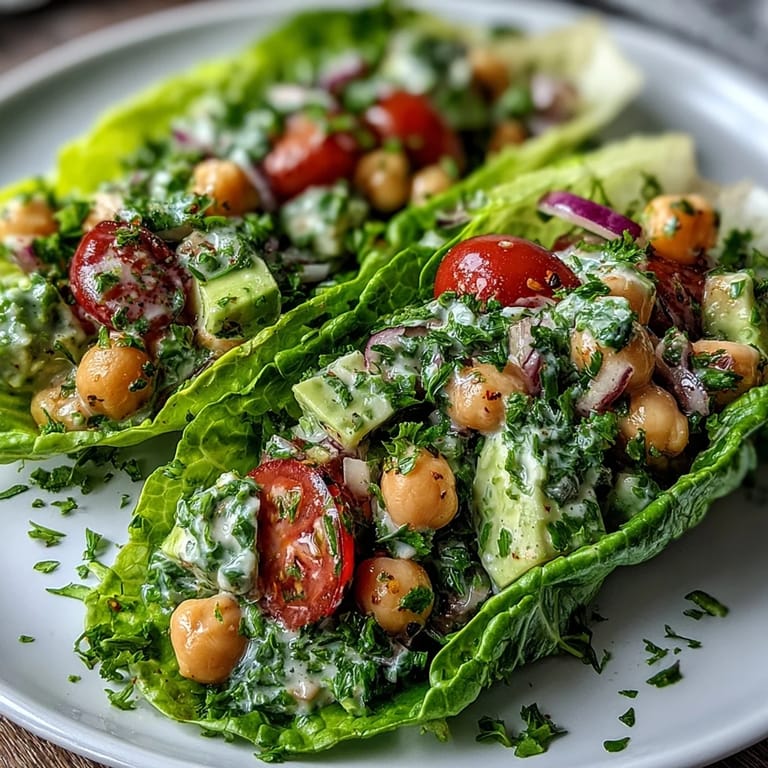
- In a large bowl, combine the drained chickpeas and diced avocado, then gently mash them together with a fork until you have a chunky, creamy texture with some whole chickpeas still intact for bite. You want it to feel substantial but not paste-like—think of it as a loose spread rather than hummus.
- Build the Filling:
- Toss in the red onion, cucumber, cherry tomatoes, and fresh herbs, stirring gently to distribute everything without breaking down the avocado further. The mixture should look vibrant and alive, with different colors and textures visible in every spoonful.
- Whisk the Dressing:
- In a small bowl, combine lemon juice, olive oil, Dijon mustard, minced garlic, salt, and pepper, whisking until everything emulsifies into a creamy, pale dressing. Taste it straight from the whisk—it should make your mouth water a little.
- Dress and Combine:
- Pour the dressing over the chickpea mixture and toss everything together gently but thoroughly, making sure every ingredient gets coated. The salad should look cohesive but not wet or drowning in dressing.
- Prepare the Shells:
- Wash and thoroughly dry your lettuce leaves, patting them with a clean towel or spinning them in a salad spinner, because water is the enemy of crispness. Lay them out on a clean surface so they're easy to grab when you're ready to assemble.
- Assemble with Care:
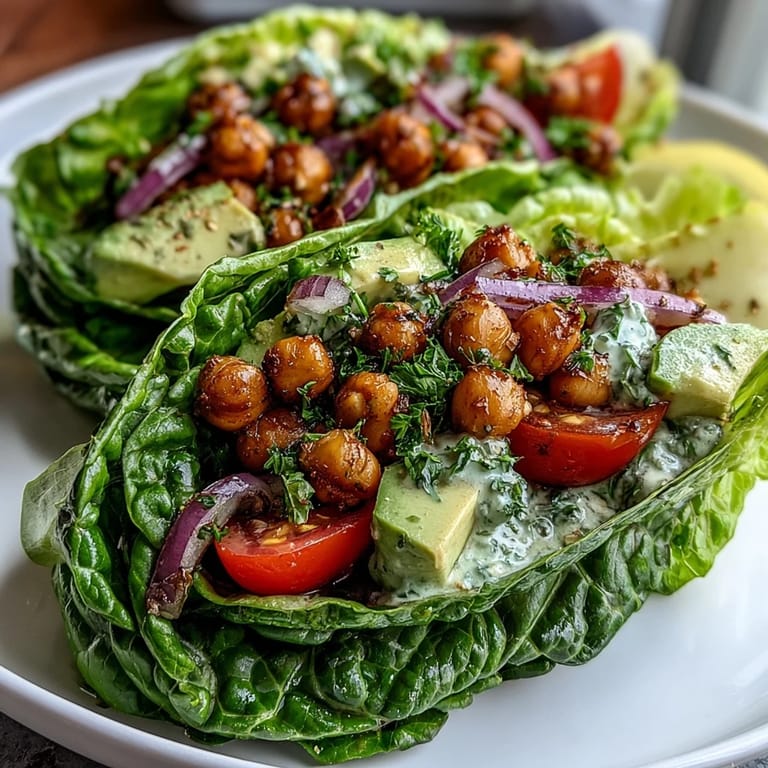
- Spoon the salad mixture generously into the center of each lettuce leaf, then add any optional toppings like radishes, shredded carrots, or sprouts. Fold the sides of the leaf up and around the filling in a loose wrap, leaving the top slightly open so the beautiful filling is visible.
- Serve and Enjoy:
- Eat immediately while the lettuce is still crisp and everything is at its brightest, perhaps with a chilled drink beside you to complete the moment.
 Merken
 There's something almost meditative about assembling these wraps—the gentle process of spooning, folding, and creating something edible with your hands feels more like art than cooking. I've noticed that when people eat food they've watched you make right in front of them, they taste it differently, more slowly, more gratefully.
Why Lettuce Shells Change Everything
Using lettuce instead of bread or tortillas completely shifts the eating experience, and it took me a few attempts to understand why this matters. The crispness stays intact throughout the meal, providing constant textural contrast rather than that inevitable sogginess that comes with traditional wraps. When you bite through cool, crisp lettuce into the creamy chickpea mixture, it feels lighter and more refreshing, especially on warm days when heavy carbs feel wrong.
The Dressing as the Secret Weapon
This emulsified dressing does so much more than just add flavor—it acts as a binding agent that helps all the ingredients feel cohesive while still tasting fresh and bright. The Dijon mustard is doing subtle work here, amplifying the garlic and lemon without announcing itself, and the balance of acid and oil creates something that tastes restaurant-quality despite being made in your kitchen. When people ask me what makes these wraps taste so good, they're usually reacting to this dressing without realizing it.
Customization Without Losing the Plot
The beauty of this recipe is that it welcomes additions without falling apart, whether that's shredded carrots, thinly sliced radishes, sprouts, or even a sprinkle of toasted seeds for extra protein. I've added everything from pomegranate seeds to shredded beets, and each version has its own personality while maintaining the core identity of bright, fresh, and satisfying. Trust your instincts when improvising, but remember that less is sometimes more when it comes to keeping the wrap balanced and eatable.
- Add crispy elements like toasted pumpkin seeds or sunflower seeds for texture if you're feeling the wrap needs more body.
- A sprinkle of feta cheese or nutritional yeast transforms the flavor profile entirely if you want something richer.
- Prepare all components separately and let guests assemble their own wraps for a fun, interactive meal.
 Merken
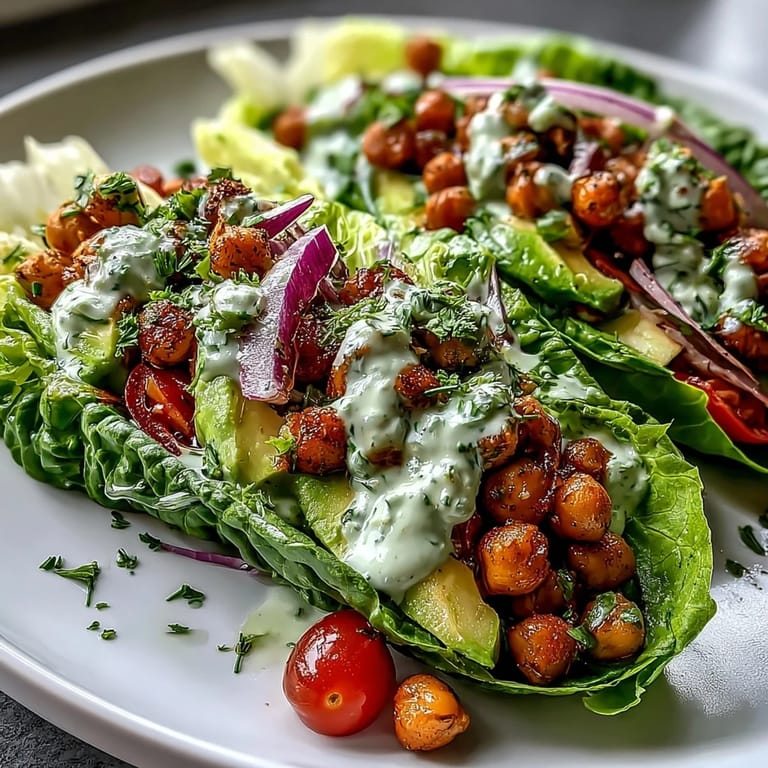
 These wraps have quietly become my answer to lunch, a small ritual that reminds me that good food doesn't require complicated techniques or long ingredient lists. Every time I make them, I'm grateful for that Saturday morning when I opened my fridge and decided to break the rules.
Häufige Fragen zum Rezept
- → Wie verhindere ich, dass die Salatblätter welken?
Salatblätter kurz vor dem Servieren waschen, trocken tupfen und kühl lagern, damit sie knackig bleiben.
- → Kann ich das Dressing variieren?
Ja, Zitronensaft kann durch Limettensaft ersetzt und Kräuter wie Basilikum ergänzt werden für eine frische Note.
- → Wie mache ich die Füllung besonders cremig?
Avocado leicht zerdrücken und mit Kichererbsen grob vermengen, um eine angenehme Konsistenz zu erzielen.
- → Welche Salatblätter eignen sich am besten als Hülle?
Krause oder Römersalatherzen sind ideal, da sie stabil und dennoch zart genug zum Einwickeln sind.
- → Kann ich die Wraps vorbereiten und später servieren?
Salat und Dressing getrennt lagern und erst kurz vor dem Servieren mischen, um Frische und Knackigkeit zu erhalten.