 Merken
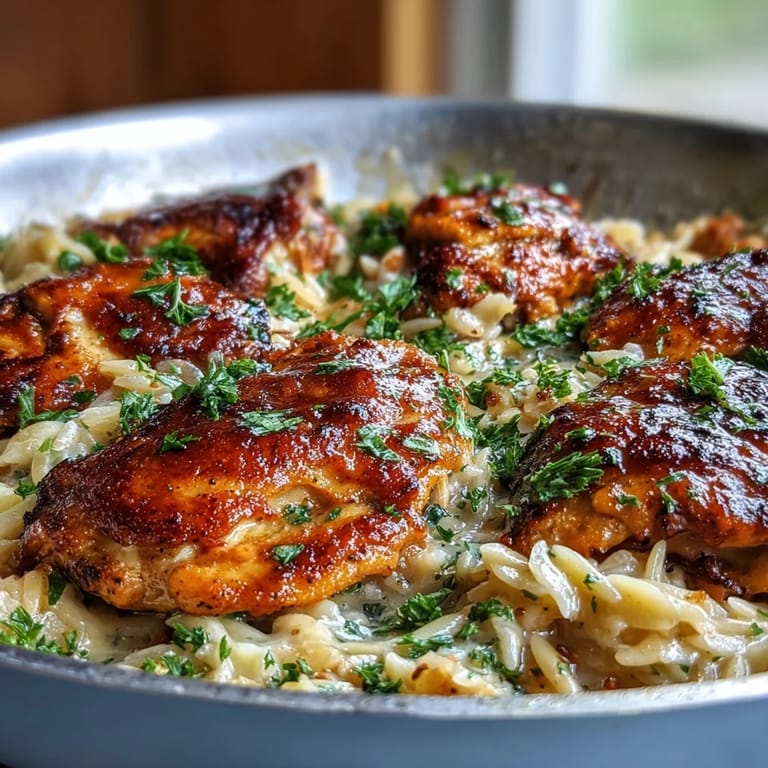
 An unplanned rainy Thursday led me to this dish, actually. I'd grabbed chicken thighs from the market without a real plan, and my pantry was practically screaming orzo at me. What started as "I'll just throw something together" became this creamy, garlicky moment that filled my kitchen with the kind of smell that makes you forget it's cold outside. My partner came home mid-cook and stood in the doorway just breathing it in, which tells you everything you need to know.
I made this for my sister on a night when she was going through something tough, and watching her face light up at that first creamy, garlicky bite reminded me why comfort food matters. It wasn't fancy, but it was exactly what she needed—something warm, filling, and made with attention. She asked for the recipe twice, which feels like the highest compliment.
Ingredients
- Boneless, skinless chicken thighs or breasts (1 lb / 450 g, cut into bite-size pieces): Thighs stay juicier than breasts, but honestly, use what you have—this dish is forgiving either way. The key is cutting them into similar-sized pieces so they cook evenly.
- Kosher salt (1 tsp), black pepper (½ tsp), Italian seasoning (1 tsp): Don't skip the seasoning step—these flavors bloom into the cream sauce and make everything sing.
- Olive oil (1 tbsp): You need just enough to get that golden crust on the chicken without it swimming in grease.
- Garlic cloves (4, minced) and small yellow onion (1, finely diced): The garlic does the heavy lifting here, so mince it fine so it melts into the sauce rather than leaving chunks.
- Baby spinach (1 cup / 150 g, roughly chopped, optional): I add this for color and nutrition, but if you skip it, the dish is just as wonderful.
- Orzo pasta (1½ cups / 270 g): This tiny pasta shape absorbs the sauce beautifully—it's not just suspended in liquid like some pastas, it cradles the creaminess.
- Low-sodium chicken broth (3 cups / 720 ml): Go low-sodium so you can control the salt level as the sauce reduces.
- Heavy cream (½ cup / 120 ml): This is what turns everything into that silky, luxurious sauce—don't substitute with water, it matters.
- Freshly grated Parmesan cheese (¾ cup / 60 g): Fresh is non-negotiable here; the pre-grated stuff has additives that prevent it from melting smoothly.
- Unsalted butter (2 tbsp): Butter brings richness and helps you control the final salt level of the dish.
- Fresh parsley (2 tbsp, chopped) and additional Parmesan for serving: These finishing touches brighten everything and make it look intentional.
Tired of Takeout? 🥡
Get 10 meals you can make faster than delivery arrives. Seriously.
One email. No spam. Unsubscribe anytime.
Instructions
- Season and prep your chicken:
- Pat your chicken pieces with salt, pepper, and Italian seasoning, then let them sit for a minute while you heat the oil—this helps the seasoning stick and cooks into the meat rather than sliding off.
- Sear the chicken until golden:
- Heat oil in your skillet over medium-high heat until it shimmers, then add chicken in a single layer and don't move it around for at least 3 minutes—you want that golden crust. Once it's colored and cooked through, about 5–7 minutes total, move it to a plate.
- Build the flavor base:
- Reduce heat to medium, add butter, then soften the onion until it's translucent, about 3 minutes. Add minced garlic and let it toast just until fragrant, maybe 1 minute—you're looking for that moment when the kitchen smells like garlic heaven but the garlic isn't burnt.
- Toast the orzo:
- Stir in the dry pasta and keep stirring for 1–2 minutes until it's lightly colored and smells toasted. This step adds a subtle depth that takes the whole dish from good to memorable.
- Add broth and let it simmer:
- Pour in the chicken broth and scrape the bottom of the pan with your spoon to release all those browned, flavorful bits. Bring to a gentle boil, then lower the heat and simmer covered for 8–10 minutes, stirring now and then so the pasta cooks evenly and doesn't stick.
- Return the chicken and finish the sauce:
- Once the orzo is tender and most of the liquid is absorbed, stir in the seared chicken with any juices that pooled on the plate, then add the heavy cream and Parmesan. If you're using spinach, add it now and let it wilt for just a minute.
- Taste and finish:
- Simmer gently for 2–3 minutes until the sauce turns silky and creamy, then taste it—add more salt, pepper, or Parmesan if it needs it. Trust your palate here, not just the recipe.
 Merken
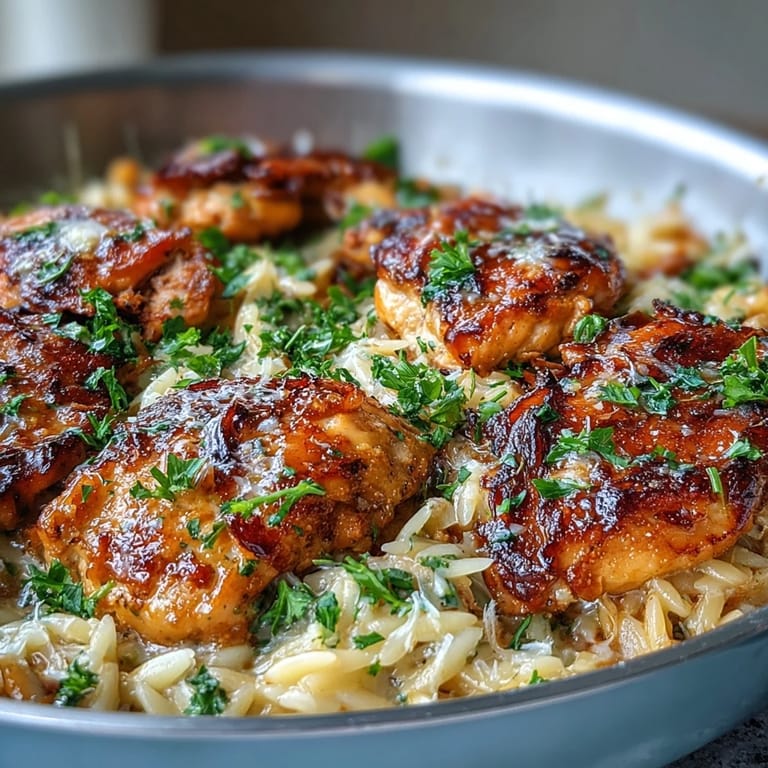
 There's a moment halfway through cooking when you smell the garlic toasting and the pasta crisping up slightly, and you just know this is going to be something people remember. That's when cooking stops feeling like a chore and starts feeling like magic.
The Magic of One-Pot Cooking
Cooking everything in one skillet isn't just about convenience, though that's part of it. Each layer builds on the last—the browned bits from the chicken flavor the butter and oil, the garlic and onion toast in that same golden residue, the orzo absorbs all of it as it cooks. By the time you add the cream, you're not making a sauce from scratch; you're bringing together a story that started with that first sear.
Timing and Texture
The orzo finishes cooking in about 8–10 minutes, and it should be al dente—tender but with a slight firmness when you bite it. If it's mushy, it was overcooked; if it's crunchy, it needed more time. Watch it as it cooks, stir occasionally, and taste it around the 8-minute mark. The most common mistake is cooking it too long before adding the cream, which leaves nothing for the sauce to coat.
Variations and Swaps
This dish is genuinely flexible, and that's part of why it became a regular on my table. Mushrooms or bell peppers add earthiness and sweetness; sun-dried tomatoes bring a slight tang; roasted red peppers add color and a smoky note. Even if you skip the spinach, the core dish stands strong. You can also use half-and-half instead of heavy cream for something lighter, or substitute small pasta shapes like ditalini if orzo isn't what you have on hand.
- Add 1 cup of chopped mushrooms or bell peppers with the onion for extra vegetables and depth.
- If you want it lighter, swap the heavy cream for an equal amount of half-and-half or even Greek yogurt stirred in at the end.
- Fresh herbs like thyme or basil can replace the Italian seasoning if you're working with what's in your garden.
 Merken
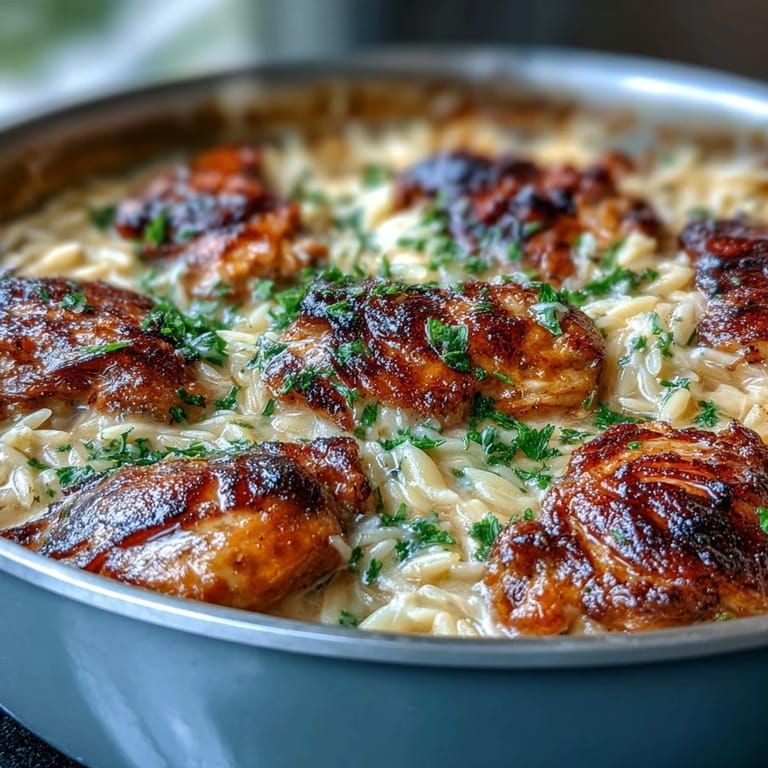
 This is the kind of meal that proves you don't need hours in the kitchen or a long list of exotic ingredients to create something worth remembering. Forty-five minutes from start to finish, one pan, and something that tastes like you actually tried.
Häufige Fragen zum Rezept
- → Kann ich Hühnchenbrust anstelle von Schenkeln verwenden?
Ja, Hühnchenbrust funktioniert hervorragend. Achten Sie darauf, das Fleisch nicht zu lange zu braten, da es schneller trocken wird als Schenkeln.
- → Wie kann ich dieses Gericht leichter machen?
Ersetzen Sie die Sahne durch halb Sahne, halb Milch. Sie können auch weniger Parmesan verwenden oder durch einen fettärmeren Käse ersetzen.
- → Kann ich Orzo durch andere Pasta ersetzen?
Ja, kleine Pastaformen wie Ditalini, Fregola Sarda oder sogar Risottoreis funktionieren gut. Passen Sie die Kochzeit entsprechend an.
- → Wie bewahre ich Reste auf?
Im Kühlschrank bis zu 3 Tage in einem verschlossenen Behälter. Beim Erwärmen evtl. etwas Milch oder Brühe hinzufügen, da die Orzo weiter Flüssigkeit aufsaugt.
- → Ist dieses Gericht einfrierbar?
Ja, bis zu 3 Monate einfrieren. Tahnen Sie vor dem Servieren vollständig auf und erhitzen Sie es langsam unter gelegentlichem Rühren.
- → Welche Beilagen passen dazu?
Ein frischer grüner Salat mit Balsamico-Dressing oder geröstetes Gemüse wie Brokkoli und Zucchini ergänzen das Gericht hervorragend.