 Merken
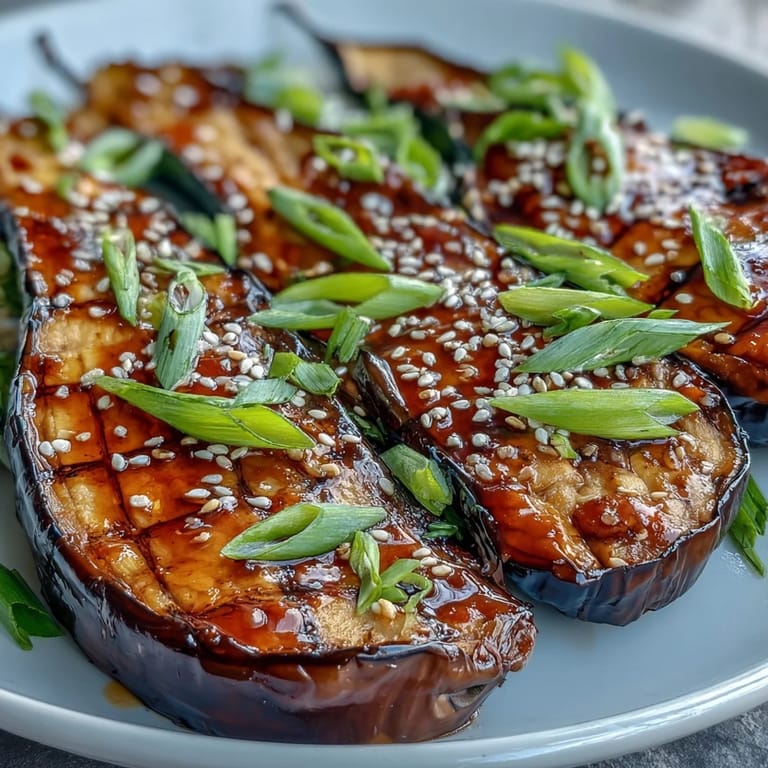
 Miso Glazed Eggplant is a stunning Japanese dish where tender eggplant halves are roasted until silky, then brushed with a sweet-savory miso glaze and broiled to caramelized perfection. This classic, umami-rich side or light main dish offers a sophisticated balance of flavors and textures.
Merken This recipe transforms the humble eggplant into a gourmet experience. By scoring the flesh and twice-cooking—first roasting and then broiling—you ensure every bite is infused with the rich, aromatic glaze.
Ingredients
Tired of Takeout? 🥡
Get 10 meals you can make faster than delivery arrives. Seriously.
One email. No spam. Unsubscribe anytime.
- Eggplant
- 2 medium Japanese eggplants
- Miso Glaze
- 3 tbsp white miso paste
- 1 tbsp mirin
- 1 tbsp sake
- 1 tbsp sugar
- 1 tbsp sesame oil
- Garnish
- 1 tbsp toasted sesame seeds
- 2 green onions, thinly sliced
Instructions
- Step 1
- Preheat oven to 400°F (200°C). Line a baking sheet with parchment paper.
- Step 2
- Slice eggplants in half lengthwise. Score the flesh in a crosshatch pattern, being careful not to pierce the skin.
- Step 3
- Brush cut sides with a little sesame oil and place cut-side up on the baking sheet.
- Step 4
- Roast for 20–25 minutes, until the flesh is tender and golden.
- Step 5
- Meanwhile, whisk together the miso paste, mirin, sake, sugar, and remaining sesame oil in a small bowl until smooth.
- Step 6
- Remove eggplants from the oven. Spread a generous layer of miso glaze evenly over the cut sides.
- Step 7
- Set oven to broil. Broil eggplants for 2–3 minutes, until the glaze bubbles and caramelizes (watch closely to prevent burning).
- Step 8
- Remove from oven and sprinkle with toasted sesame seeds and green onions. Serve warm.
Zusatztipps für die Zubereitung
To achieve the best results, use the required tools: a sharp knife for scoring, a baking sheet with parchment paper, a small mixing bowl, and a brush or spoon for glazing. Always watch the eggplants closely during the final broiling stage, as the glaze can transition from caramelized to burnt very quickly.
Varianten und Anpassungen
For a different sweetness profile, you can substitute honey or maple syrup for the sugar. For a gluten-free version, use gluten-free miso and verify that your sake and mirin labels do not contain gluten. Please note that this dish contains soy and sesame; always check ingredient labels for hidden allergens.
Serviervorschläge
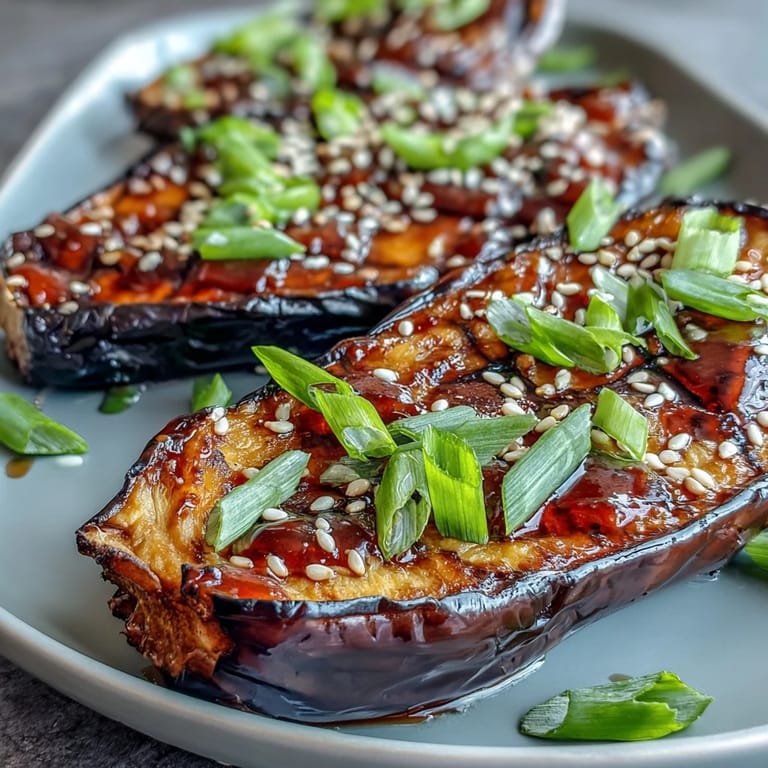
This Miso Glazed Eggplant is delicious when served alongside steamed rice or as part of a larger Japanese-inspired meal.
 Merken
 This recipe yields 4 servings. Each serving contains approximately 110 calories, 4 g of total fat, 17 g of carbohydrates, and 3 g of protein. Enjoy this healthy and flavorful dish while it is warm.
Häufige Fragen zum Rezept
- → Welche Auberginensorte eignet sich am besten?
Japanische Auberginen sind ideal dank ihres zarteren Fruchtfleisches und dünneren Schale. Klassische Auberginen funktionieren ebenfalls, benötigen jedoch eventuell etwas längere Garzeit.
- → Kann ich die Glasur vorbereiten?
Ja, die Miso-Glasur aus Miso, Mirin, Sake, Zucker und Sesamöl kann bis zu einer Woche im Kühlschrank aufbewahrt werden. Vor dem Gebrauch gut umrühren.
- → Wie verhindere ich verbrennen der Glasur?
Beim Grillen (Broilen) unbedingt genau beobachten – die Glasur karamellisiert sehr schnell. Meist reichen 2-3 Minuten, bis sie schön blasig und gebräunt ist.
- → Ist dieses Gericht vegan?
Ja, mit veganem Miso ist das Gericht vollständig pflanzlich. Die meisten traditionellen Misosorten sind ohnehin vegan, aber es lohnt sich, einen Blick auf die Zutatenliste zu werfen.
- → Was passt dazu als Beilage?
Gedämpfter Reis ist die klassische Begleitung. Ergänzend passen gegrillter Tofu, ein leichter Salat oder andere japanische Gemüsegerichte hervorragend dazu.
- → Kann ich auf Alkohol verzichten?
Mirin und Sake können durch zusätzliche Brühe oder Wasser mit etwas mehr Zucker ersetzt werden. Der Geschmack wird etwas weniger komplex, bleibt aber dennoch sehr lecker.