 Merken
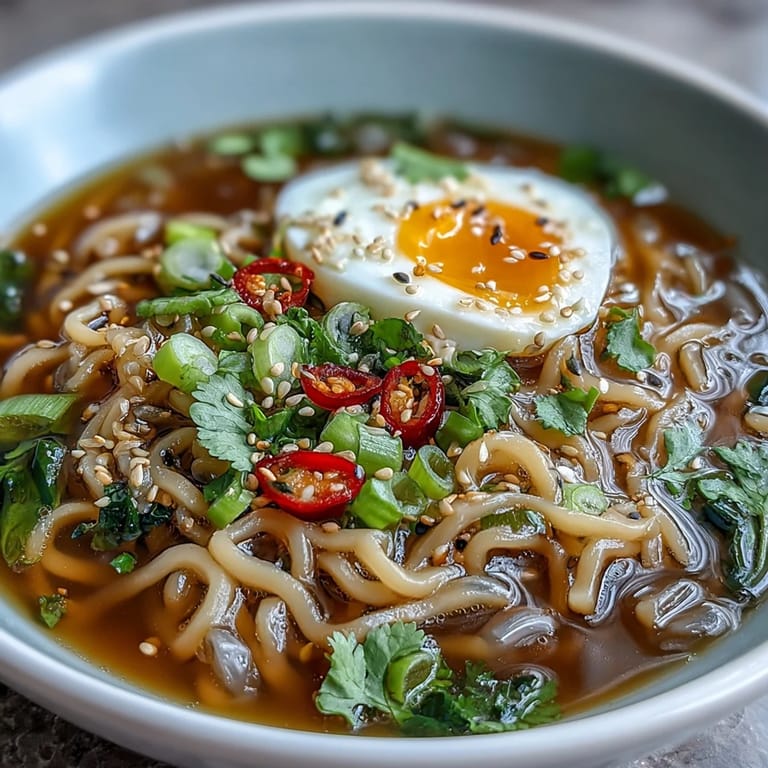
 A comforting bowl of zero-carb shirataki noodles simmered in a rich, warming bone broth, perfect for a light yet satisfying meal. This Asian-inspired dish brings together deep flavors and nutritional benefits in a simple, easy-to-prepare format.
Merken Shirataki noodles are an excellent alternative for those seeking a gluten-free and dairy-free option. When paired with high-quality bone broth, they transform into a nourishing soup that is both filling and light on the stomach.
Ingredients
Tired of Takeout? 🥡
Get 10 meals you can make faster than delivery arrives. Seriously.
One email. No spam. Unsubscribe anytime.
- 4 cups (1 liter) high-quality bone broth (beef or chicken)
- 1 thumb-sized piece fresh ginger, sliced
- 2 cloves garlic, smashed
- 2 tablespoons soy sauce or tamari
- 1 tablespoon rice vinegar
- 1 teaspoon sesame oil
- 400 g (14 oz) shirataki noodles (drained and rinsed)
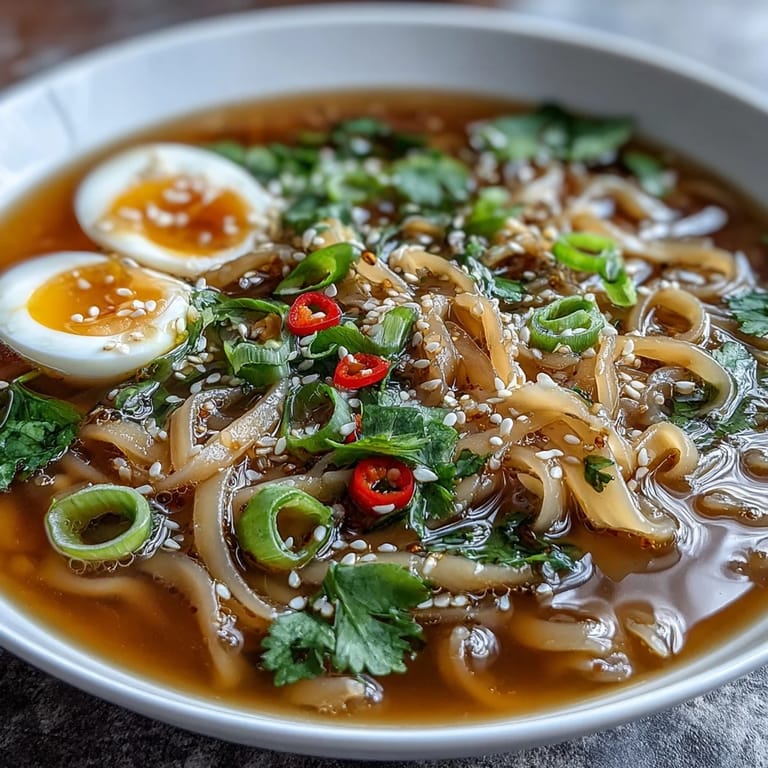
- Optional toppings: 2 soft-boiled eggs (halved), 1 small spring onion (sliced), 1 small red chili (sliced), fresh coriander or parsley, toasted sesame seeds
Instructions
- Step 1
- In a medium pot, combine the bone broth, ginger, garlic, soy sauce, rice vinegar, and sesame oil. Bring to a gentle boil over medium heat.
- Step 2
- Reduce heat and simmer for 10 minutes to allow flavors to infuse.
- Step 3
- Meanwhile, drain and thoroughly rinse the shirataki noodles under cold water. Place in a sieve and pour boiling water over them to remove any odor.
- Step 4
- Add the noodles to the simmering broth and heat through for 2–3 minutes.
- Step 5
- Remove ginger and garlic slices. Divide noodles and broth between two bowls and garnish with desired toppings.
Zusatztipps für die Zubereitung
The quality of your bone broth is essential for the best flavor. Look for store-bought varieties with no added sugar or use a rich homemade version. Ensure you rinse the noodles thoroughly to achieve the best texture and taste.
Varianten und Anpassungen
For extra protein, you can add shredded cooked chicken or tofu. To make a vegetarian version, simply substitute the bone broth with a rich vegetable broth and use tofu as a topping instead of eggs.
Serviervorschläge
Serve immediately while steaming hot. The combination of soft-boiled eggs, fresh herbs, and a hint of chili provides a beautiful contrast in textures and a gentle heat that complements the savory broth.
 Merken
 Whether you are looking for a quick lunch or a light dinner, these Shirataki Noodles with Broth offer a satisfying way to enjoy Asian-inspired flavors while keeping your meal low-carb and paleo-friendly.
Häufige Fragen zum Rezept
- → Wie entfernt man den Eigengeruch von Shirataki Nudeln?
Spülen Sie die Nudeln gründlich unter kaltem Wasser ab und übergießen Sie sie mit kochendem Wasser. Dieser Schritt entfernt den natürlichen Geruch effektiv.
- → Kann ich dieses Gericht vegetarisch zubereiten?
Ja, ersetzen Sie die Knochenbrühe durch eine kräftige Gemüsebrühe und lassen Sie die Eier weg oder verwenden Sie Tofu als proteinreiche Beilage.
- → Welche Toppings passen besonders gut?
Weichgekochte Eier, geschnittene Frühlingszwiebeln, rote Chilischoten, frisches Koriandergrün oder Petersilie sowie geröstete Sesamsamen ergänzen die Brühe hervorragend.
- → Wie lange hält sich die zubereitete Brühe?
Die fertig gekochte Brühe mit Nudeln hält sich verschlossen im Kühlschrank bis zu drei Tage. Die Nudeln können dabei etwas an Festigkeit verlieren.
- → Ist Tamari wirklich glutenfrei?
Ja, Tamari ist eine fermentierte Sojasauce ohne Weizen und eignet sich hervorragend für glutenfreie Ernährung. Alternativ können Sie Kokosaminos verwenden.