 Merken
 An afternoon in Bangkok changed everything for my relationship with dessert. I'd wandered into a small street vendor's stall, the kind where the chaos of the city melts away, and watched an elderly woman prepare sticky rice with the certainty of someone who'd done it ten thousand times. The steam rose from her bamboo steamer, and the aroma—sweet, coconutty, alive—made me understand why this dish transcends simple sweetness. When she topped it with perfectly ripe mango, I tasted something that felt both deeply comforting and impossibly elegant.
I made this for my partner on a humid summer evening when we both wanted something that felt like travel without leaving home. The kitchen filled with that intoxicating coconut sweetness, and by the time we sat down to eat, we'd transported ourselves across the world. That meal became our benchmark for what a perfect dessert could be—simple, elegant, and somehow more memorable than any elaborate cake.
Ingredients
- Glutinous (sweet) rice, 1 cup: This isn't regular rice—the starch content makes it creamy and slightly sticky when cooked, which is the whole magic of the dish. Don't skip the soaking step; it softens the grains evenly and helps them cook to that perfect tender consistency.
- Coconut milk (full fat), 1 cup: Full fat is non-negotiable here because it's what gives the rice its silky texture and rich flavor. Lite versions will leave you with something thinner and less satisfying.
- Granulated sugar, 1/4 cup: This sweetens the sauce subtly, letting the natural flavors shine through without overwhelming anything.
- Salt, 1/4 tsp: A small pinch that deepens the coconut flavor and prevents the dessert from tasting one-dimensionally sweet.
- Ripe mangoes, 2 large: Look for mangoes that yield slightly to pressure and smell fragrant at the stem end—they should be soft enough to slice cleanly but still hold their shape.
- Coconut cream and toasted sesame seeds or mung beans (optional): These garnishes add a finishing touch of richness and subtle crunch that elevates the whole plate.
Tired of Takeout? 🥡
Get 10 meals you can make faster than delivery arrives. Seriously.
One email. No spam. Unsubscribe anytime.
Instructions
- Rinse and soak the rice:
- Run cold water over the glutinous rice, stirring gently with your fingers until the water runs clear—this removes the excess starch so you don't end up with gluey rice. Let it soak for at least 4 hours or overnight; overnight is worth the wait because it ensures even, tender cooking.
- Steam the rice to creamy perfection:
- Line your steamer basket with cheesecloth, add the drained rice, and steam for 25 to 30 minutes until each grain is tender but still holds its shape. You'll know it's ready when a grain tastes soft all the way through with no chalky center.
- Warm the coconut sauce gently:
- Combine coconut milk, sugar, and salt in a saucepan and heat over medium, stirring occasionally until the sugar dissolves completely. The key is gentle heat—never let it boil, which breaks down the coconut milk and makes it thin and separated.
- Coat the rice in coconut magic:
- Transfer the hot steamed rice to a bowl, pour in 3/4 of the coconut sauce, and stir gently to coat every grain evenly. Cover and let it sit for 10 to 15 minutes so the rice absorbs the sauce and becomes creamy.
- Prepare the mangoes:
- Peel your ripe mangoes and slice them lengthwise along the pit, then slice those halves into neat strips. If they're perfectly ripe, the knife should glide through without effort.
- Plate and serve:
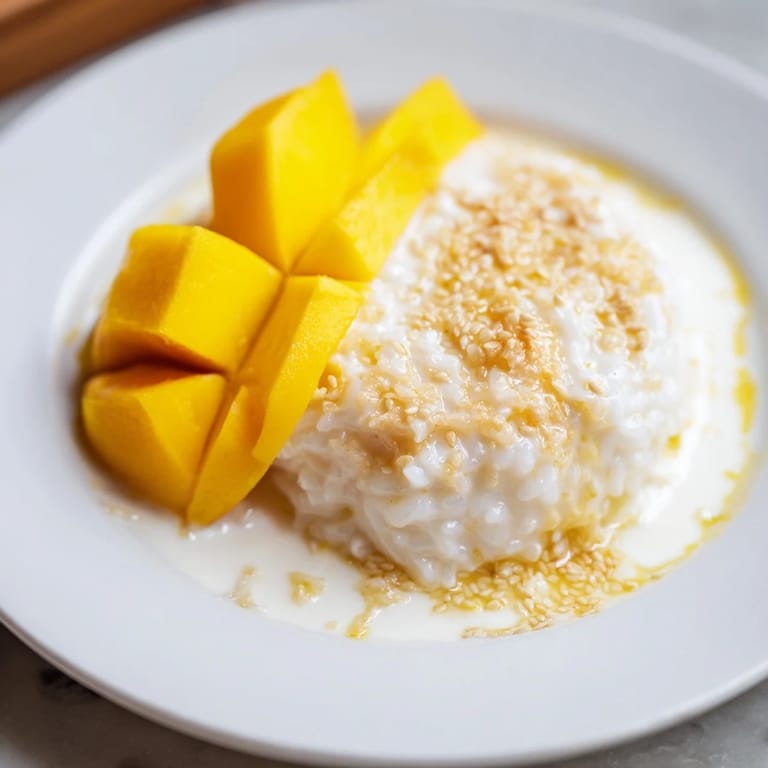
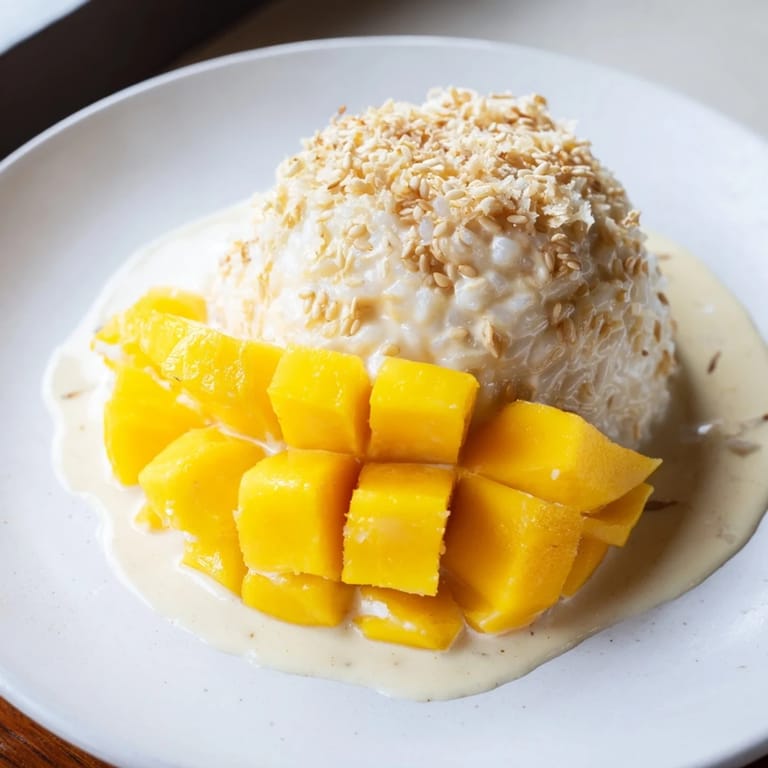
- Mound the warm, coconut-scented rice on each plate, arrange mango slices alongside it in a gentle arc, and drizzle the remaining sauce over everything. A sprinkle of coconut cream and toasted sesame seeds finishes the picture if you want that extra touch.
 Merken
 The moment I realized this dessert had become something special was when my friend—someone who usually skips sweets—asked for seconds and then a third bite. That's when I understood that great food isn't about complexity; it's about respecting a few perfect ingredients and letting them speak for themselves.
The Secret to Ripe Mangoes
Finding a truly ripe mango is half the battle, and it's worth the hunt. The fruit should yield gently to pressure in your palm, never rock-hard, and the skin should smell sweet and fragrant near the stem. Some mangoes travel poorly and arrive at the market still underripe—if that's the case, leave them on your counter for a day or two in a paper bag, where they'll finish ripening in their own time. Avoid any with soft spots or bruises, and remember that refrigeration stops the ripening process, so shop only when you're ready to use them within a day or two.
Variations and Flavor Swaps
Once you've made this classic version, you'll start imagining variations. Some cooks add a teaspoon of vanilla or a few drops of rose water to the coconut sauce for subtle floral notes. Others substitute palm sugar for a deeper, more caramelized sweetness that's closer to what you'd find in Thailand. I've also seen home cooks toss a few pandan leaves into the steaming water—they add an almost fragrant, grassy note that's distinctly Thai without overpowering the dish.
Why This Dessert Works
Sticky rice and mango have lived together in Thai dessert tradition for good reason. The warm, creamy rice provides a soft canvas, while the cool, bright fruit cuts through all that richness with its natural acidity and refreshing sweetness. It's a study in contrast and balance, the kind of pairing that makes you wonder why more desserts don't work this way.
- Serve this right after assembly while the rice is still warm and the mango is still cool—that temperature difference is part of the magic.
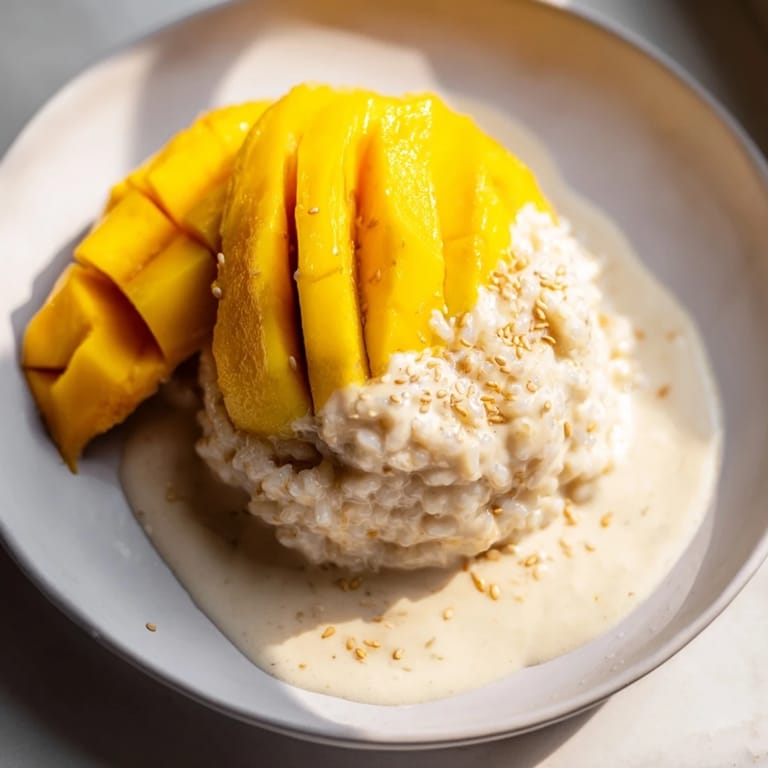
- If you want extra elegance, slice the mango into thin pieces and arrange them in an overlapping pattern rather than casual chunks.
- Always taste the coconut sauce before you pour it on the rice; if it needs a touch more salt or sweetness, adjust it then rather than after the fact.
 Merken
 This dessert teaches you something important about cooking: that restraint and quality ingredients can outshine complicated techniques. Make it once, and you'll understand why it's been cherished across Thai kitchens for generations.
Häufige Fragen zum Rezept
- → Wie wird der Klebreis richtig zubereitet?
Der Klebreis sollte zunächst gründlich gewaschen und mindestens 4 Stunden eingeweicht werden, bevor er schonend gedämpft wird, bis er weich und klebrig ist.
- → Warum wird Kokosmilch verwendet?
Kokosmilch verleiht dem Klebreis eine angenehme Cremigkeit und süße Nuancen, die die Frische der Mango ergänzen.
- → Kann man das Gericht vegan zubereiten?
Ja, alle Zutaten sind pflanzlich, somit ist es von Natur aus vegan und glutenfrei.
- → Welche Garnituren passen gut dazu?
Geröstete Sesamsamen oder Mungbohnen und ein Klecks Kokoscreme runden das Geschmackserlebnis ab.
- → Wie bewahrt man den Klebreis am besten auf?
Der Klebreis sollte frisch serviert werden, da er beim Kühlen fest wird und an Textur verliert.