 Merken
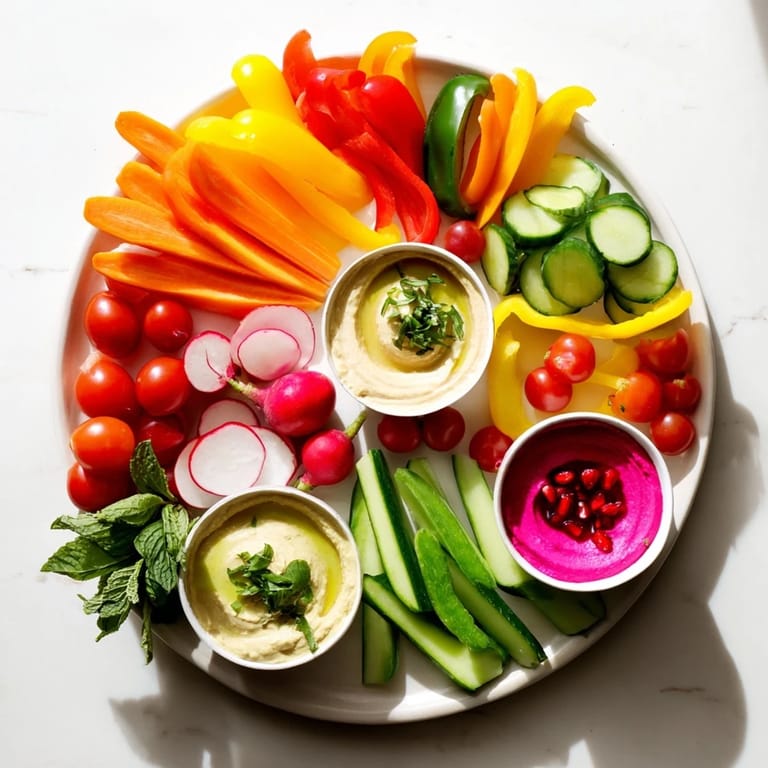
 There's something magical about watching people's faces light up when they see a platter so alive with color that it barely looks real. I put together my first version of this one afternoon when friends dropped by unexpectedly, and I had nothing but the vegetables I'd grabbed at the market that morning. What started as improvisation became the dish I now make whenever I want to feel like I'm gathering people around something that celebrates both abundance and simplicity.
I remember setting this out for a potluck one spring and realizing halfway through the evening that no one was touching the crackers—they were too busy dipping vegetables straight into the hummus and reaching for the jewel-toned radish slices. That taught me that sometimes the simplest ingredients, arranged with care, become the most memorable part of a meal.
Ingredients
- Rainbow carrots: Their natural sweetness makes them irresistible, and the colors are half the visual appeal—don't peel them if they're fresh enough.
- Baby cucumbers: They're crisp and delicate, perfect for dipping without falling apart in the dip.
- Cherry tomatoes: Mix colors if you can find them; the assortment makes the platter feel alive and generous.
- Radishes: Thinly sliced so they're less sharp and more elegant, they add a peppery note and striking color contrast.
- Baby bell peppers: Sweet and tender, they're one of those vegetables people actually reach for without hesitation.
- Snap peas: Eat one raw while you're prepping—they remind you why fresh vegetables taste so good.
- Mixed grapes: Their natural sweetness balances the savory dips and adds a casual, abundant feel to the platter.
- Strawberries: Halved so they're easy to eat and pretty to look at, they bring a soft sweetness that surprises people.
- Pineapple chunks: Fresh, not canned, with that bright acidity that cuts through the richness of the dips.
- Kiwi slices: They stay vibrant if you add them just before serving, and their tartness is a perfect counterpoint to creamier dips.
- Classic hummus: The foundation dip, familiar and reliable—make it yourself if you have time, but store-bought works beautifully.
- Beetroot hummus: The jewel tone alone makes people want to try it, and it tastes like you put thought into the dips.
- Guacamole: Keep it simple with just avocado, lime, salt, and cilantro so it stays fresh and doesn't overpower other flavors.
- Cashew tzatziki: Creamy and cool, it's the unexpected dip that always gets the most compliments once people taste it.
- Pomegranate seeds: Scatter them in the gaps—they add jewel-like pops of color and a burst of tartness in every bite.
- Fresh herbs: Mint, basil, and parsley aren't just garnish; they're flavor, freshness, and the finishing touch that makes everything feel intentional.
- Gluten-free crackers or pita chips: Have them on the platter, but don't be surprised if they're the last thing to disappear.
Tired of Takeout? 🥡
Get 10 meals you can make faster than delivery arrives. Seriously.
One email. No spam. Unsubscribe anytime.
Instructions
- Wash and prepare everything first:
- Rinse all vegetables and fruits, then dry them thoroughly so they stay crisp and the platter doesn't get watery as it sits. Slice everything to a size that's easy to grab and eat with one hand.
- Choose your platter:
- Find something large enough that everything feels abundant but not cramped—a wooden board, ceramic platter, or even a clean marble tile works beautifully.
- Place the dips strategically:
- Pour each dip into its own small bowl, then position them at different points across the platter so people can move around and try everything without bottlenecking at one spot.
- Build in color blocks:
- Group vegetables and fruits by type, then arrange those groups in a way that makes you smile when you look at it—alternating colors, mixing textures, letting the natural beauty guide you.
- Fill the gaps with intention:
- Scatter pomegranate seeds, fresh herbs, and edible flowers (if using) into the spaces between groups to add unexpected pops of flavor and make the whole thing feel complete and generous.
- Serve immediately or chill:
- If you're serving right away, the everything is at its crispest and most vibrant. If you need to prep ahead, cover it loosely and refrigerate; everything stays fresh for a few hours.
 Merken
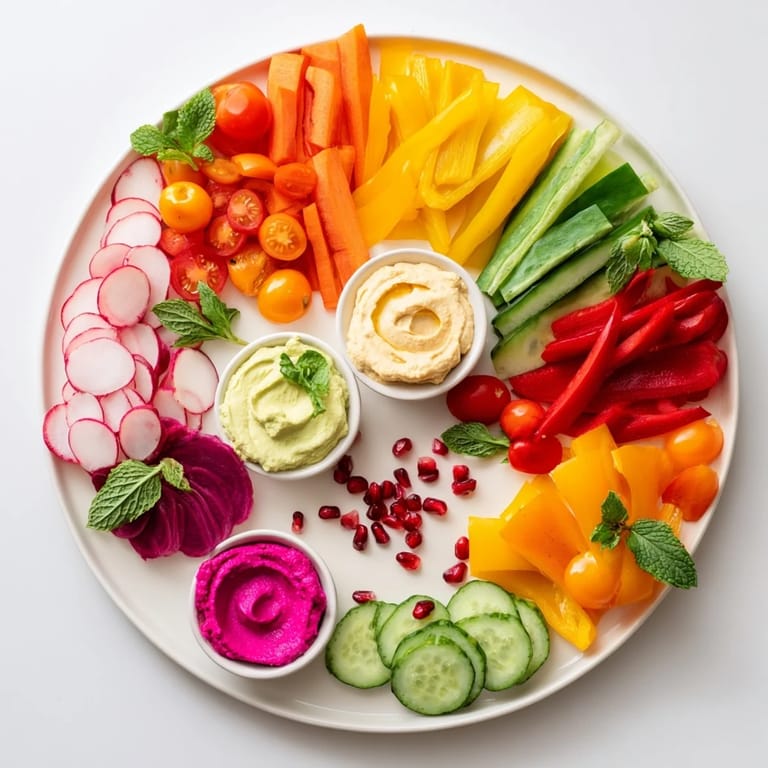
 There was a moment at a dinner party when my cousin, who usually only eats beige foods, reached for a radish without thinking and discovered something he actually liked. That's when I realized this platter isn't just about being healthy or vegan—it's about making people curious about flavors and textures they might have dismissed before.
The Art of Color Blocking
Arranging this platter is less about following a recipe and more about thinking like you're painting a picture. I group everything by color first—all the purples and reds on one side, the yellows and oranges on another—then step back and see if the whole thing feels balanced. If something looks like it needs more visual weight, I'll add more of that color or swap vegetables around until my eye is happy. The math doesn't matter; what matters is that when someone walks into the room, they stop for a second because the platter is just beautiful to look at.
Making the Dips Shine
The dips are where you can get creative and where people often taste something they've never had before. Cashew tzatziki especially surprises people—it's creamy, cooling, and familiar enough that it doesn't intimidate, but different enough that they remember it. If you're short on time, store-bought hummus is absolutely fine, but I always whisk in a little extra lemon juice and a pinch more garlic to make it taste intentional and fresh. The beetroot hummus is worth buying pre-made because getting that color right from scratch takes time you probably don't have.
Timing and Storage
The beauty of this platter is that you can prep it the morning of your gathering and it holds up beautifully in the fridge, covered loosely with plastic wrap. The only vegetables I add at the last minute are kiwis and strawberries, since they can weep a little if they sit too long next to acidic ingredients. Everything else—the carrots, peppers, cucumbers, radishes—actually tastes crisper if they've had a little chill time. If you're serving this at room temperature, which some people prefer, just assemble it no more than an hour before guests arrive.
- Prep vegetables the morning of but don't slice until closer to serving time if you want maximum crispness.
- Keep dips covered separately in the fridge and bring them out 10 minutes before serving so they're not ice-cold.
- Add fresh herbs and pomegranate seeds right before people arrive for that just-made look and taste.
 Merken
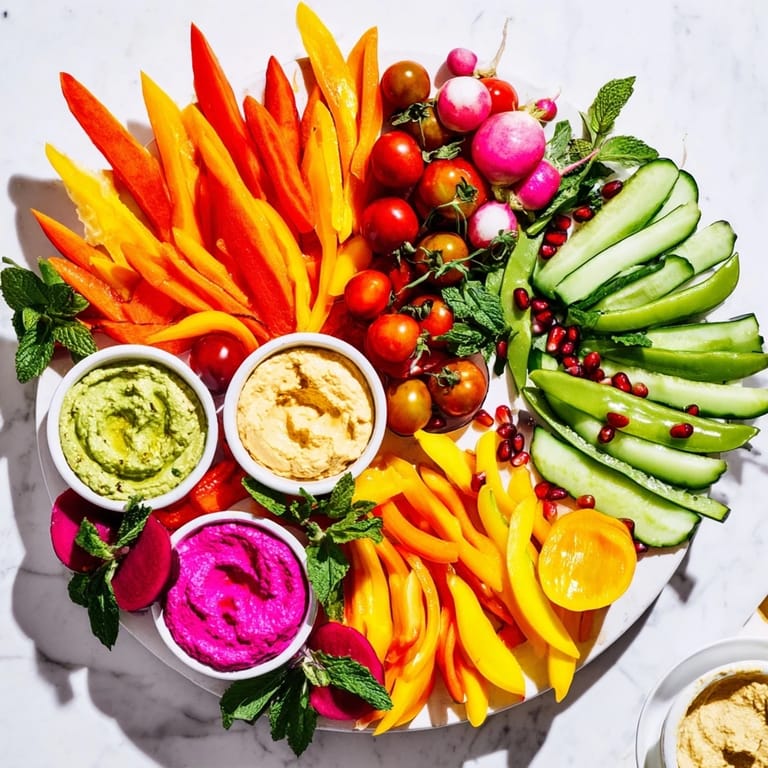
 This platter is proof that the simplest meals are often the ones people remember most. Make it with whatever feels abundant to you, and trust that good ingredients arranged with care will always make people happy.
Häufige Fragen zum Rezept
- → Wie bleibt das Gemüse frisch und knackig?
Das Gemüse sollte vor dem Anrichten gründlich gewaschen und gut getrocknet werden, um Frische zu bewahren. Kühl lagern und kurz vor dem Servieren schneiden sorgt für knackigen Biss.
- → Welche Dips passen gut zu dieser Platte?
Vielfältige pflanzliche Dips wie klassischer Hummus, Rote-Bete-Hummus, Guacamole und Cashew-Tzatziki harmonieren wunderbar und bieten abwechslungsreiche Geschmacksnoten.
- → Kann die Platte vorbereitet und im Voraus serviert werden?
Die einzelnen Gemüse- und Obststücke können vorab geschnitten werden. Das Anrichten sollte allerdings kurz vor dem Servieren erfolgen, um Frische und Optik zu erhalten.
- → Wie lassen sich Textur und Geschmack variieren?
Zusätze wie glutenfreie Cracker, Granatapfelkerne, frische Kräuter oder essbare Blüten sorgen für interessante Kontraste und zusätzliche Aromen.
- → Sind Allergene zu beachten?
Nüsse im Cashew-Tzatziki sowie Sesam im Hummus sind potentielle Allergene. Diese können je nach Bedarf weggelassen oder ersetzt werden.