 Merken
 My neighbor threw together a Cinco de Mayo block party last spring, and I found myself standing in her kitchen watching her char corn in a cast-iron skillet while reggaeton played from someone's phone outside. The smell hit me immediately—buttery, smoky, alive—and I realized right then that street corn didn't need to stay on a stick. That evening, wedged between conversations and laughter, I mentally sketched out these quesadillas, and they've become my go-to when I want to bring that same festival energy into an easy weeknight dinner.
I made these for my parents without warning one Saturday afternoon, and my mom actually paused mid-bite and asked what restaurant I'd ordered from. Watching her realize I'd made them myself, and then watching her eat three wedges while standing at the counter, taught me something about how the right combination of textures and flavors can feel like a celebration even when you're just cooking at home.
Ingredients
- Corn kernels (2 cups): Fresh corn in summer is ideal, but frozen works beautifully here because you're going to char it anyway, and that heat brings out the sweetness either way.
- Red onion (1 small, diced): The sharp bite softens as it cooks and becomes almost sweet—this is your textural contrast against the creamy cheese.
- Jalapeño (1, seeded and chopped): Seeding it keeps the heat manageable, but leave the seeds in if your guests actually like spice and aren't just pretending.
- Fresh cilantro (2 tablespoons): Add this after cooking so it keeps its brightness and doesn't turn into dark green regret.
- Monterey Jack cheese (2 cups, shredded): This melts like a dream and plays nice with the other flavors without taking over the party.
- Cotija cheese (1/2 cup, crumbled): It's salty and crumbly and adds a textural element that melted cheese alone can't give you—don't skip it for something else.
- Sour cream (1/2 cup for filling, another 1/2 cup for crema): This is doing double duty, so make sure you have a full cup on hand.
- Olive oil (1 tablespoon): Just enough to get the corn moving in the pan without making everything feel greasy.
- Smoked paprika, cumin, chili powder (1 teaspoon, 1/2 teaspoon, 1/2 teaspoon respectively): Together these create that warm, toasty flavor that says Mexico without screaming it.
- Flour tortillas (8 medium): Don't use the paper-thin ones—you need enough structure to hold the filling without tearing.
- Chipotle peppers in adobo (1–2): These are packed in a tangy sauce that's almost as important as the peppers themselves, so don't drain them completely.
- Lime juice (1 tablespoon for crema): This brightens the smoke and prevents the crema from feeling heavy.
Tired of Takeout? 🥡
Get 10 meals you can make faster than delivery arrives. Seriously.
One email. No spam. Unsubscribe anytime.
Instructions
- Char the corn until it gains a voice:
- Heat your oil over medium-high heat and let the pan get hot enough that you hear a sizzle the moment the corn hits it. Stir occasionally so the kernels blacken unevenly—those charred bits are flavor, and they're what separate this from sad corn salad.
- Build the filling with intention:
- Once the corn has some color, add your red onion and jalapeño and let them soften without losing their structural integrity. Sprinkle in your spices while everything's warm so they bloom and distribute evenly, then kill the heat and fold in the cilantro and Cotija so they stay fresh.
- Whisk the crema into submission:
- In a separate bowl, combine your sour cream, chopped chipotles, lime juice, and garlic powder and whisk until smooth. Taste it and adjust the heat—this is your secret weapon, so it should taste good enough to eat with a spoon.
- Assemble with cheese discipline:
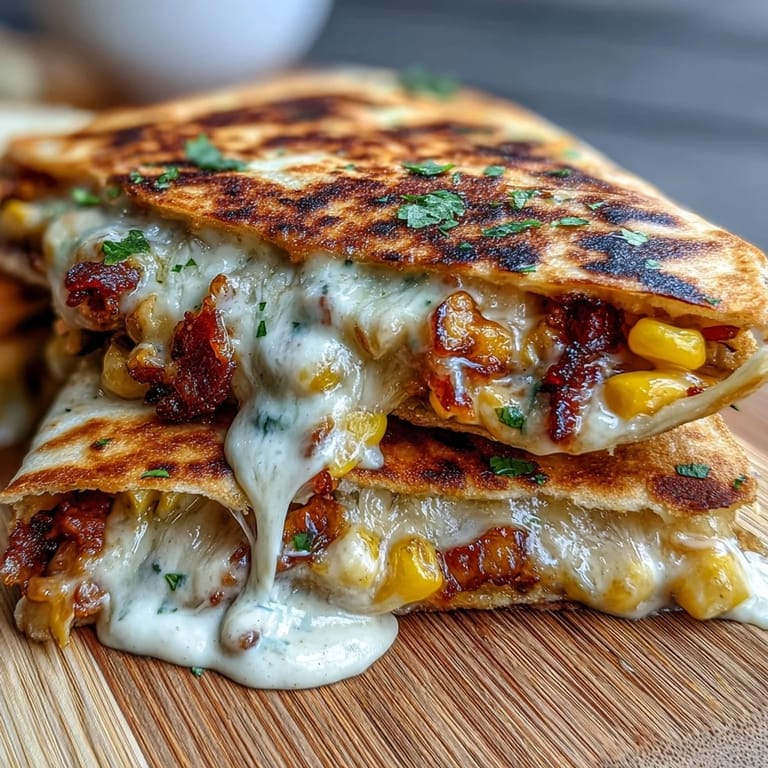
- Lay out four tortillas and distribute half your Monterey Jack evenly across each one. Top with the corn mixture, then cover with the remaining cheese before capping with the final tortilla. This cheese sandwich approach ensures melting happens evenly and nothing escapes during cooking.
- Cook until golden and unified:
- Heat a clean skillet over medium heat and cook each quesadilla for 2–3 minutes per side until it's golden and the cheese has fused everything together. Don't rush this or let the heat creep up—medium is your friend.
- Plate and dress for the occasion:
- Slice each quesadilla into four wedges, drizzle generously with chipotle crema, shower with extra Cotija and cilantro, and serve with lime wedges so people can add brightness if they want it.
 Merken
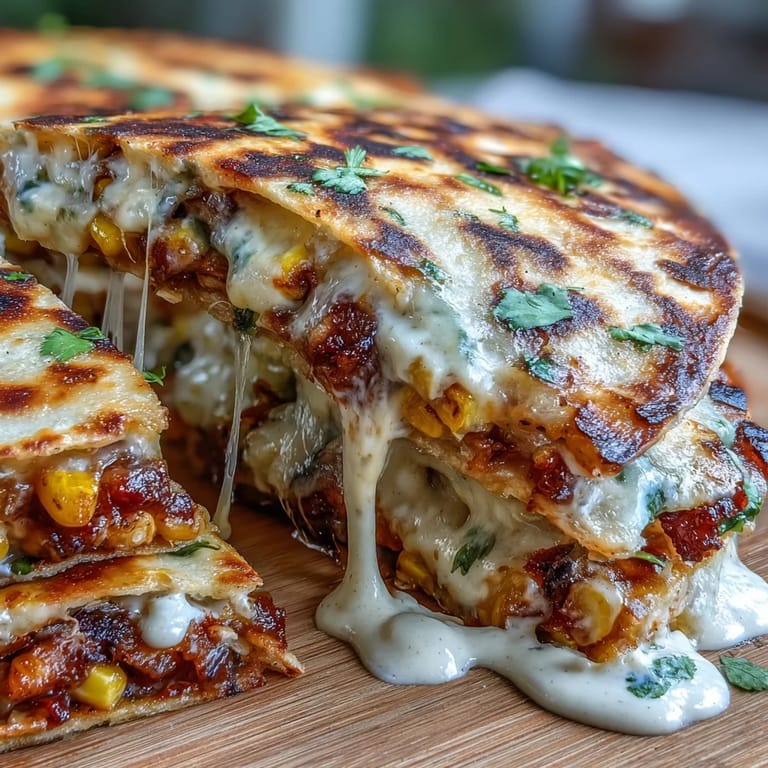
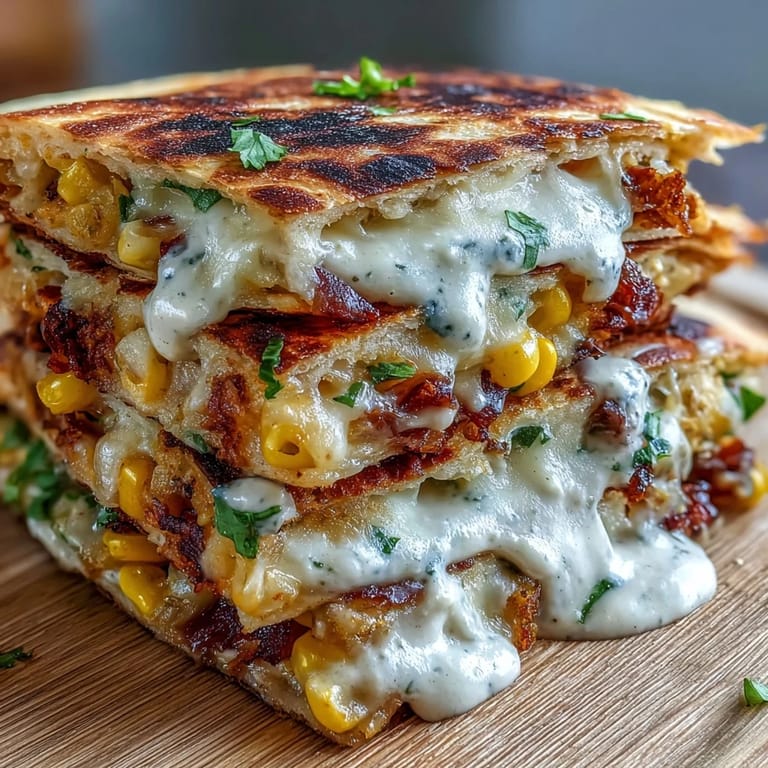
 There's a moment when you slice into a freshly cooked quesadilla and hear that satisfying crackle, and the cheese pulls in long, gorgeous strings. That's the moment this dish stops being dinner and becomes something you want to make again immediately, probably for someone you care enough about to stand in the kitchen with.
The Magic of Charred Corn
Charring isn't just about looks—it's about chemical transformation. When corn kernels hit heat and stay there, the natural sugars brown and create flavors that can't exist any other way. This is why frozen corn works just as well as fresh here: you're not trying to showcase delicate sweetness, you're building something deeper and more complex through intentional browning.
Chipotle Crema as Your Flavor Anchor
This crema does more work than it looks like it's doing. The sour cream provides cool creaminess, the chipotle adds smoke and heat, and the lime juice cuts through both and keeps everything from sitting heavy on your palate. It's the difference between a good quesadilla and one that people ask you to make again.
Cheese, Texture, and Why Cotija Matters
Monterey Jack is your workhorse—it melts, it binds, it creates that satisfying stretch when you pull a wedge apart. But Cotija is your personality. It's salty and crumbly and adds a textural contrast that transforms a one-note cheese experience into something dimensional and interesting. If you can't find Cotija, feta works, but the flavor profile shifts slightly toward brightness instead of earthiness.
- Toast your tortillas lightly in a dry skillet for thirty seconds before assembling if you want them to have more structure and crispness.
- Make your chipotle crema up to two days ahead so the flavors have time to marry and deepen.
- Serve these immediately after cooking while the cheese is still at its melting peak—they're good at room temperature, but they're transcendent while warm.
 Merken
 These quesadillas are proof that you don't need complicated techniques or rare ingredients to create something that feels celebratory. Make them for people you want to impress, or make them for yourself on a random Tuesday when you deserve something that tastes like a party.
Häufige Fragen zum Rezept
- → Wie kann ich den Mais am besten rösten?
Erhitzen Sie Olivenöl in der Pfanne und braten Sie die Maiskörner bei mittlerer Hitze, bis sie leicht angebräunt sind, etwa 4-5 Minuten. So entfalten sie ein süßes, nussiges Aroma.
- → Welche Käse eignen sich für diese Quesadillas?
Monterey Jack sorgt für ein angenehmes Schmelzverhalten, während Cotija für einen würzigen Kontrast und etwas Textur sorgt. Alternativ kann auch Feta verwendet werden.
- → Wie entsteht die rauchige Note der Crema?
Die Chipotle-Crema kombiniert cremige Sauerrahm mit fein gehackten Chipotle-Chilis in Adobo-Sauce, frischem Limettensaft und Gewürzen für ein rauchiges Aroma.
- → Kann ich die Quesadillas auch mit Fleisch zubereiten?
Ja, durch Zugabe von gekochtem, zerkleinertem Hühnchen kann das Gericht fleischhaltig gestaltet werden, ohne die Basiszutaten zu verändern.
- → Wie serviere ich die Quesadillas am besten?
Nach dem Erhitzen werden die Quesadillas in Keile geschnitten, mit zusätzlichem Cotija-Käse und frischem Koriander garniert sowie Limettenvierteln und der Chipotle-Crema serviert.
- → Kann ich gefrorenen Mais verwenden?
Ja, lassen Sie gefrorenen Mais vorher auftauen und gut abtropfen, bevor Sie ihn anbraten, um überschüssige Feuchtigkeit zu vermeiden.